Category: Uncategorised

  • Self- reflected account of Simulated work experience

    In Simulated Work Experience, I was mainly responsible for background design. My tasks included researching visual references, creating mood boards, developing initial concept designs, and producing background designs for each shot.

    Research

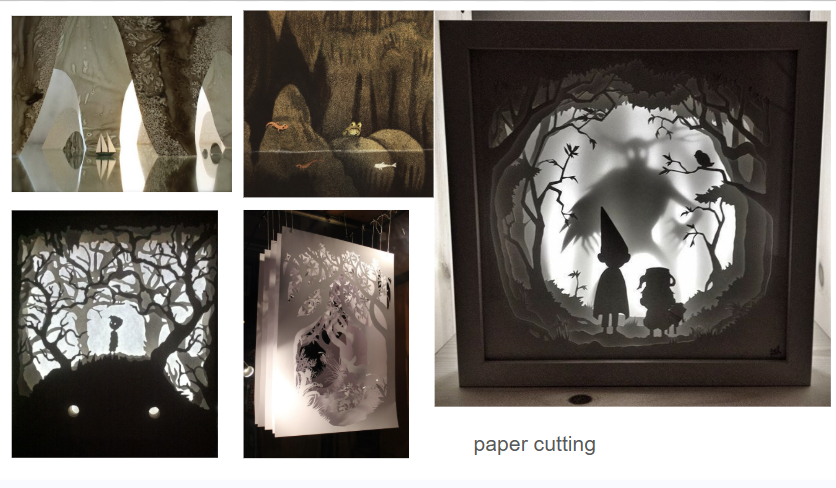
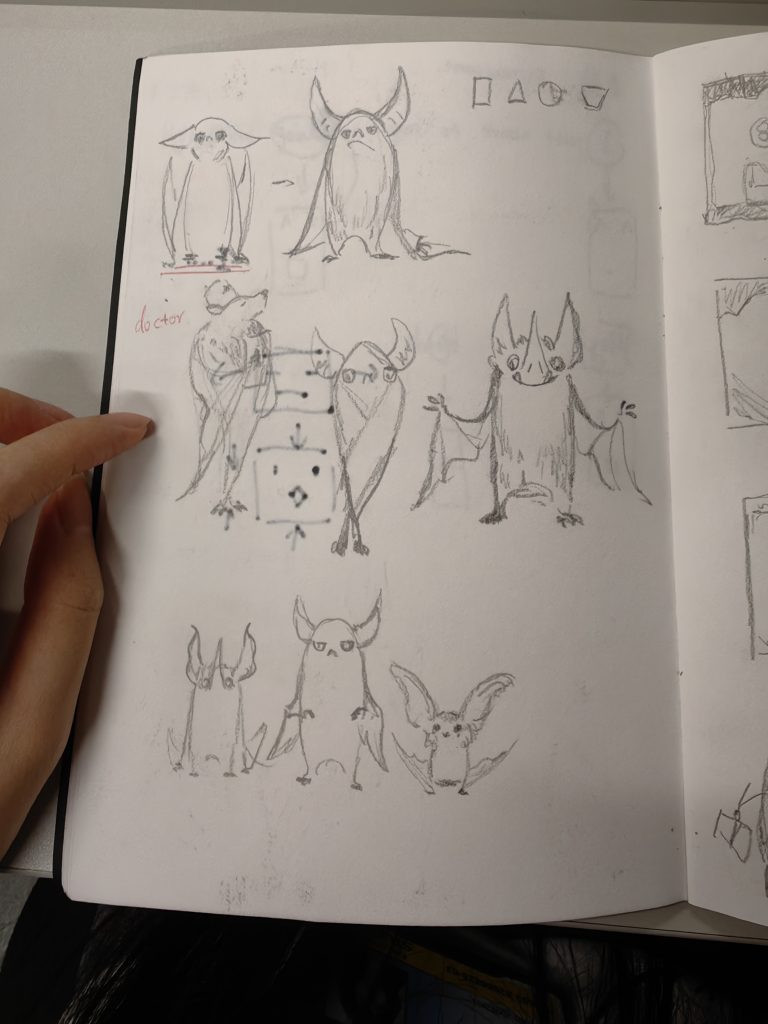
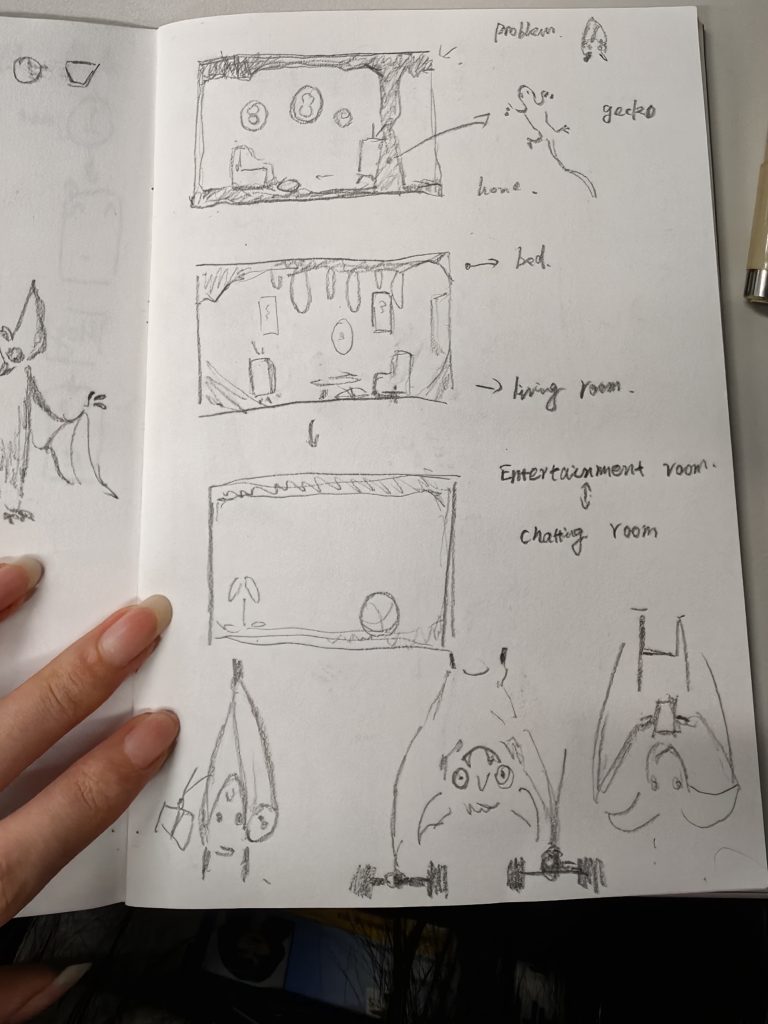
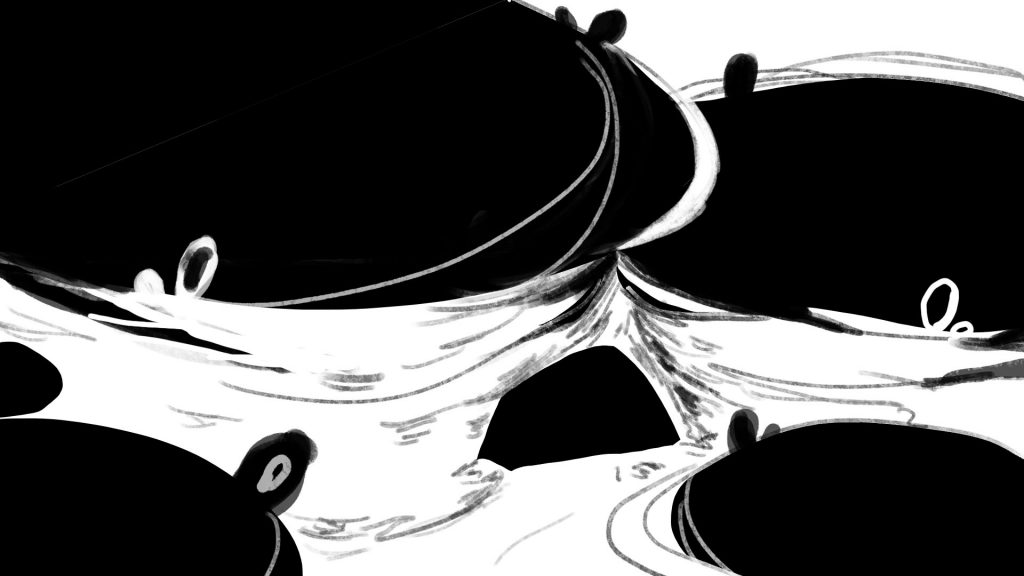
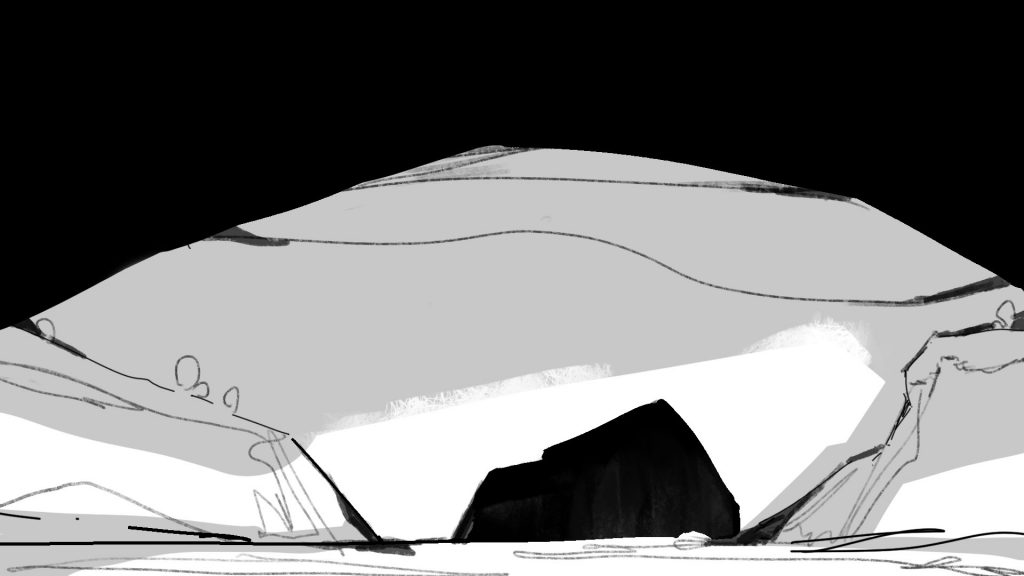
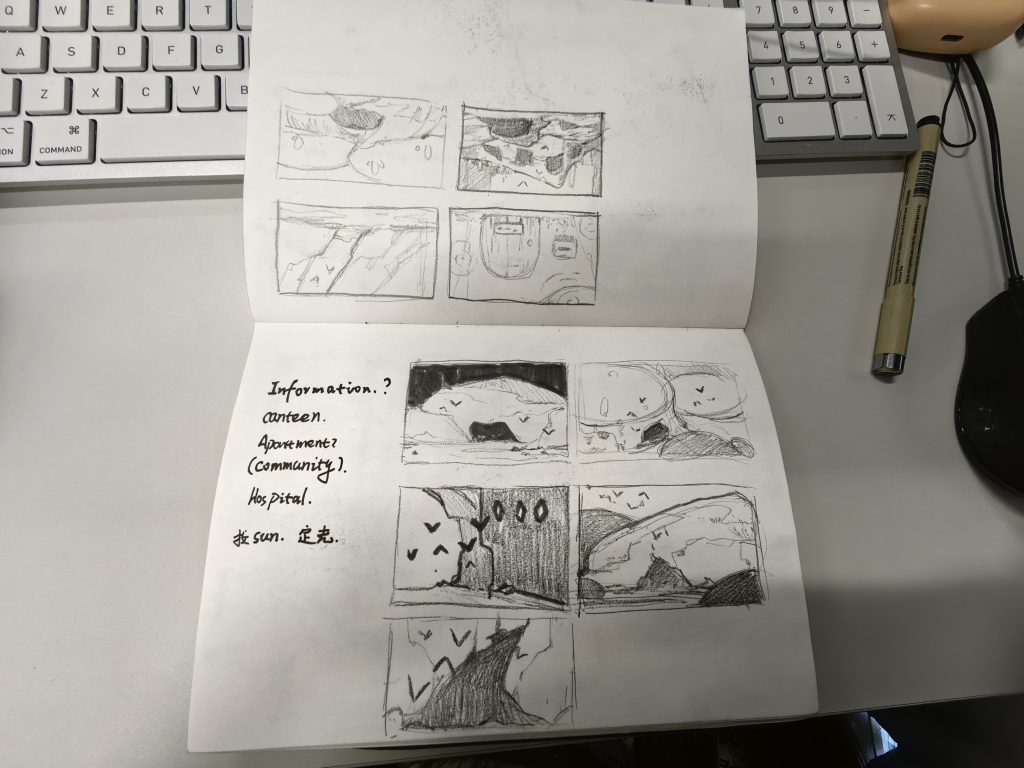
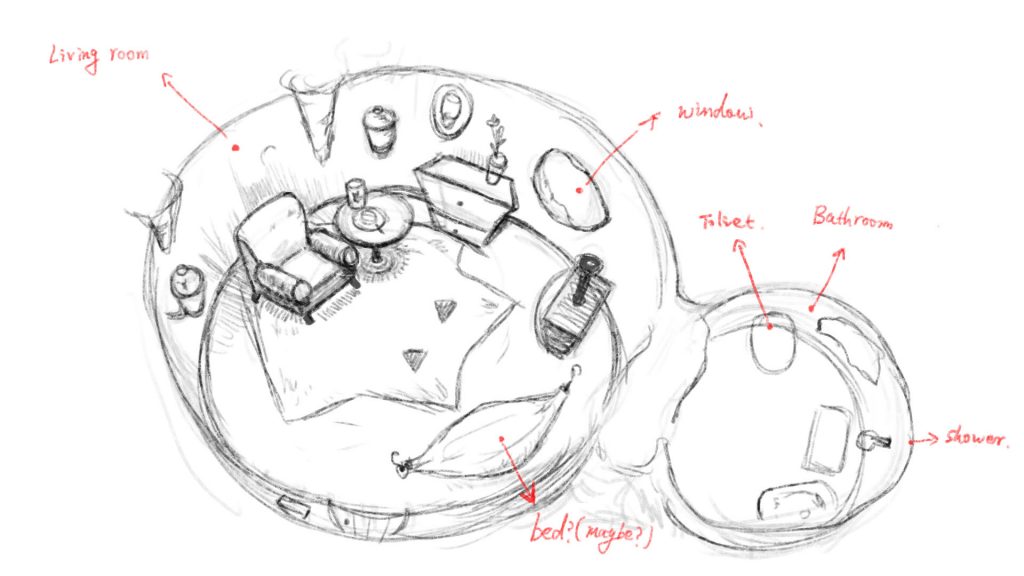
    At the beginning of the project, I reviewed the project materials to understand the theme and narrative of the animation. Based on my understanding of the animatic, I researched this theme (Picture 1.) and drew some rough sketches in advance. (Picture 2.). These early sketches were prepared for our first group discussion so that we could start developing ideas and move into production more efficiently.
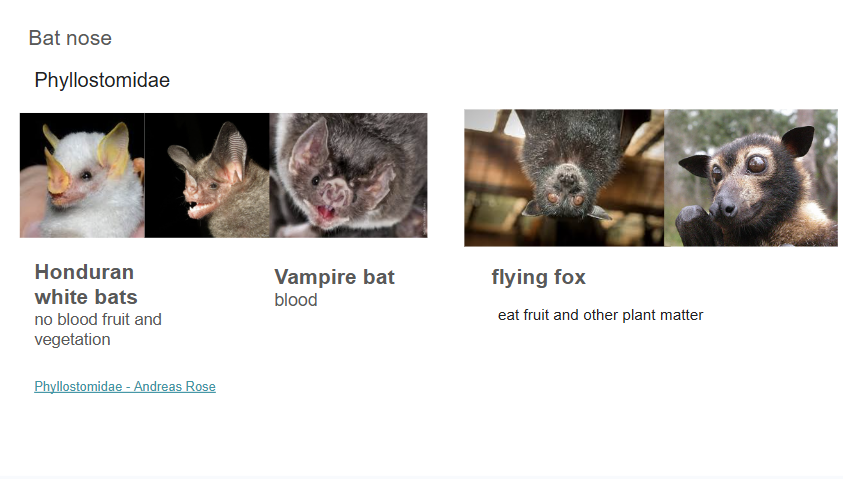
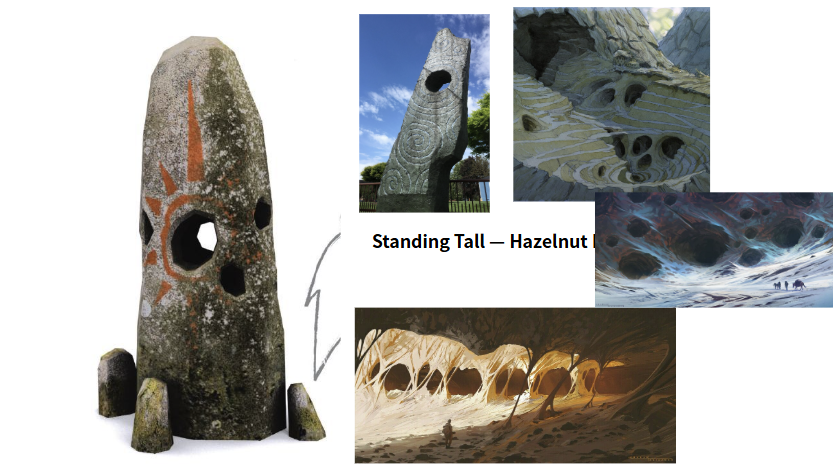
    Picture 1. Initial Research and Moodboard

    During the discussion, my teammate proposed creating the animation in a black-and-white visual style, which is also an interesting challenge for me. Compared with color backgrounds, I believe the black and white style needs to focus on the relationship between lines, shapes, and composition.

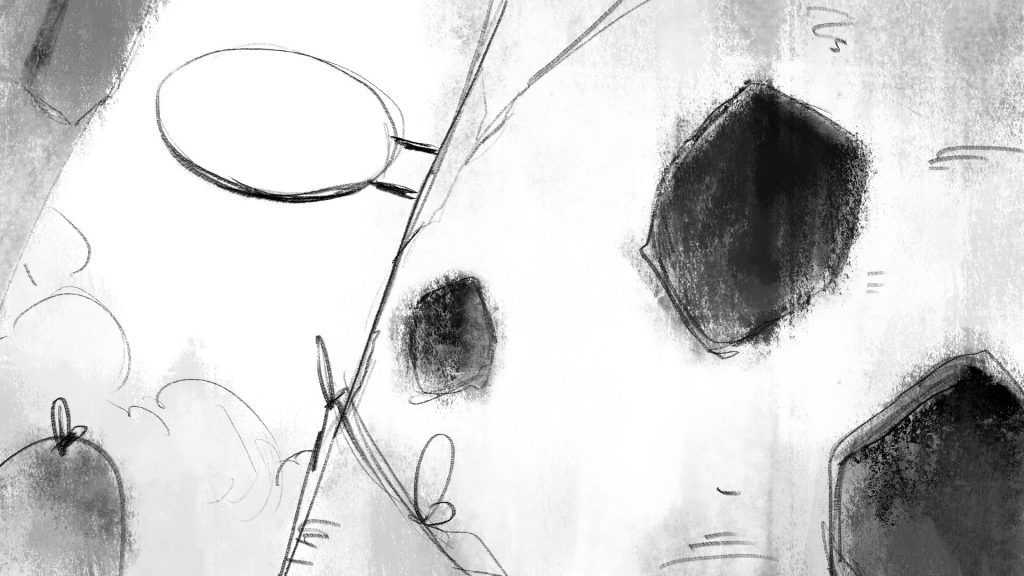
    Therefore, in my second research I found the Chinese artist Gui Yuan (Picture 3).I was inspired by the strong sense of movement in his lines and the way he uses black-and-white shapes to create dynamic compositions. His work helped me think about how the visual style of the background could be developed, especially in terms of light and shadow.

    Background moodboard: https://pin.it/7AEQ7zucO

    Development and Collaboration

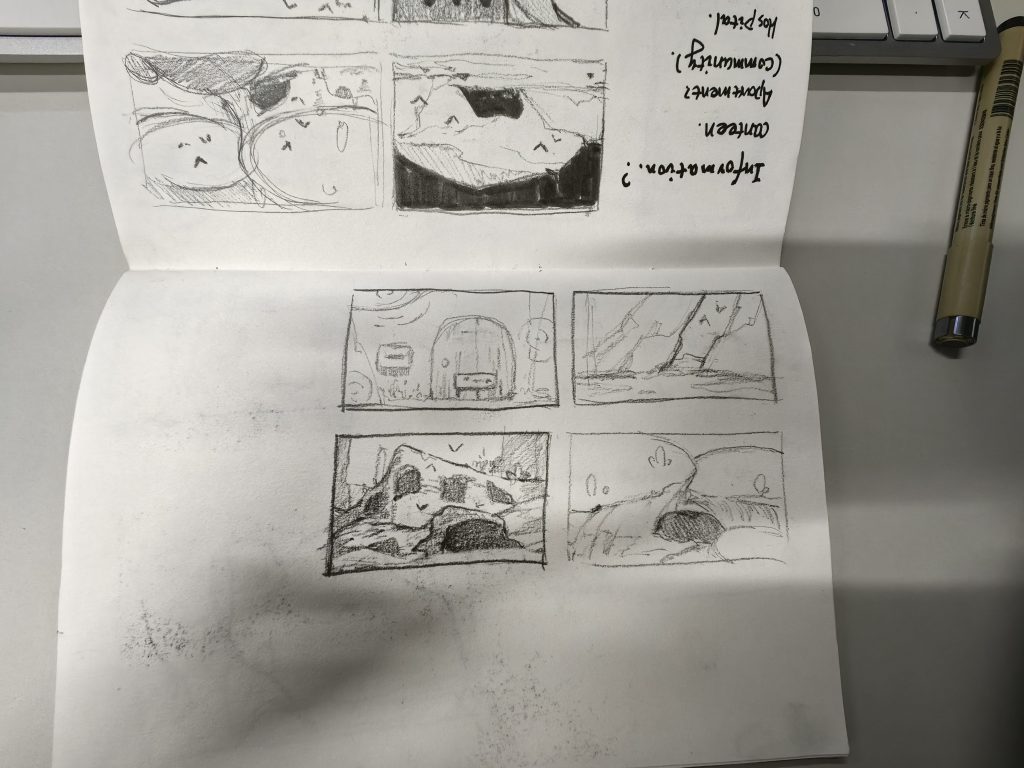
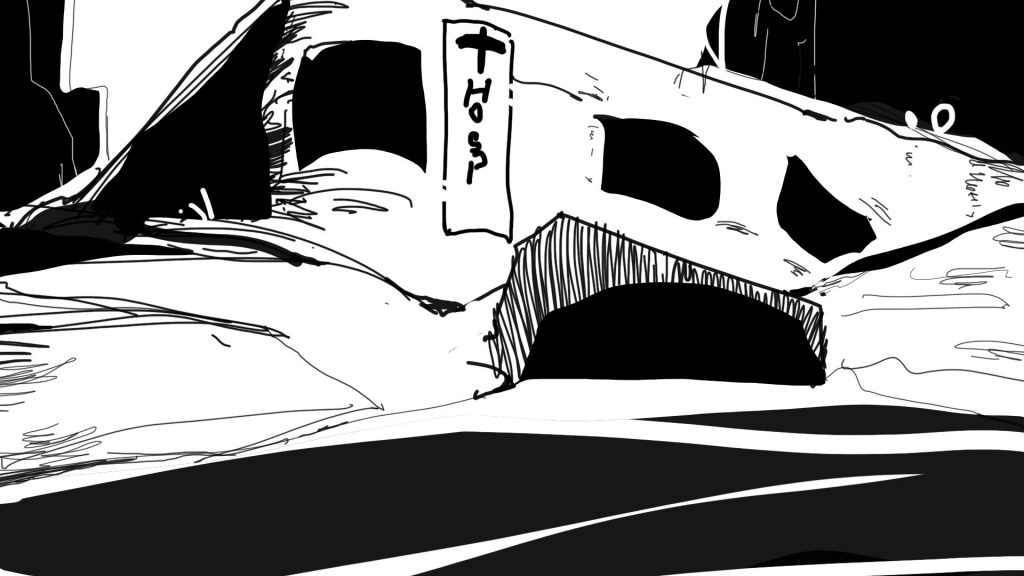
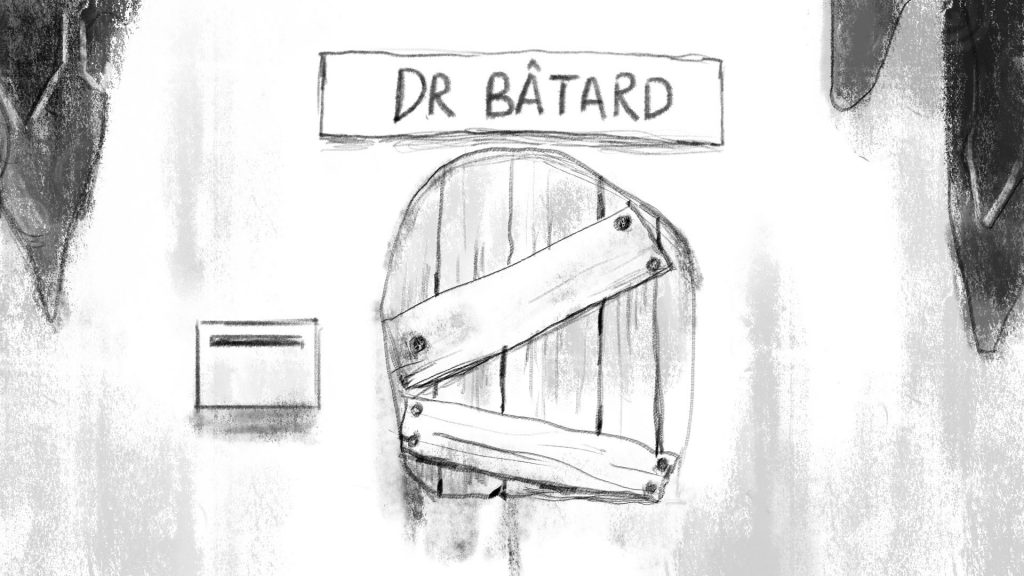
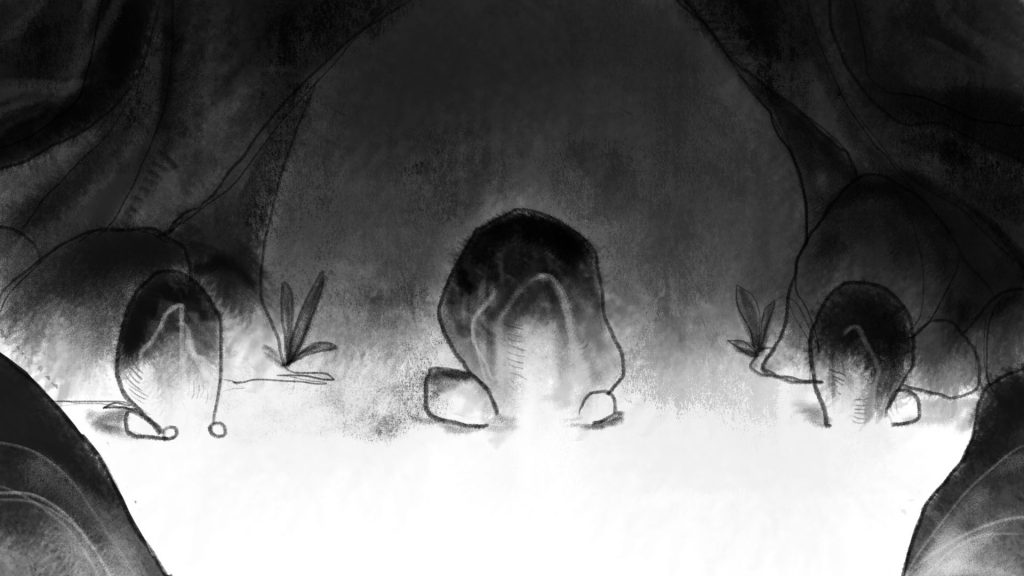
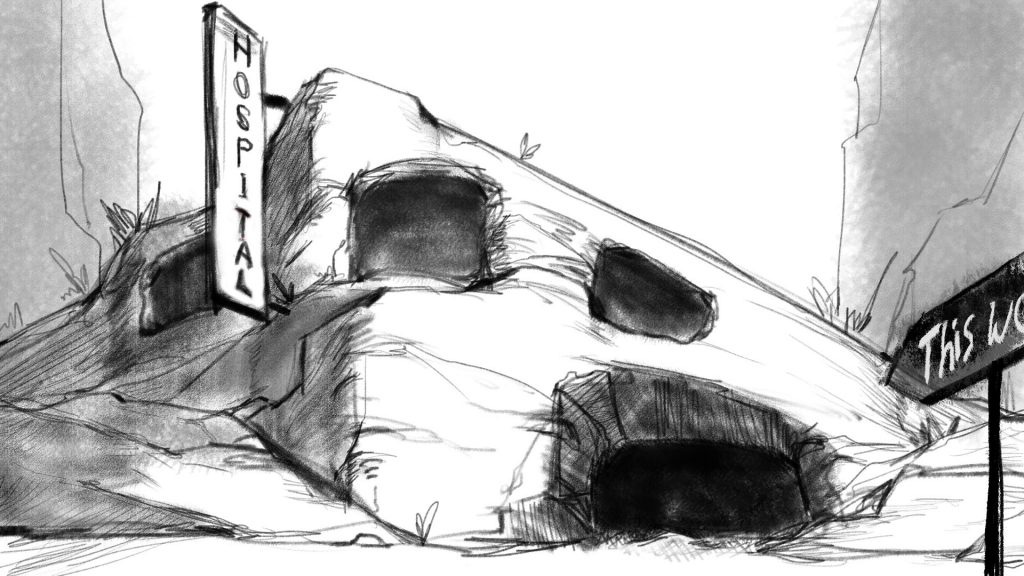
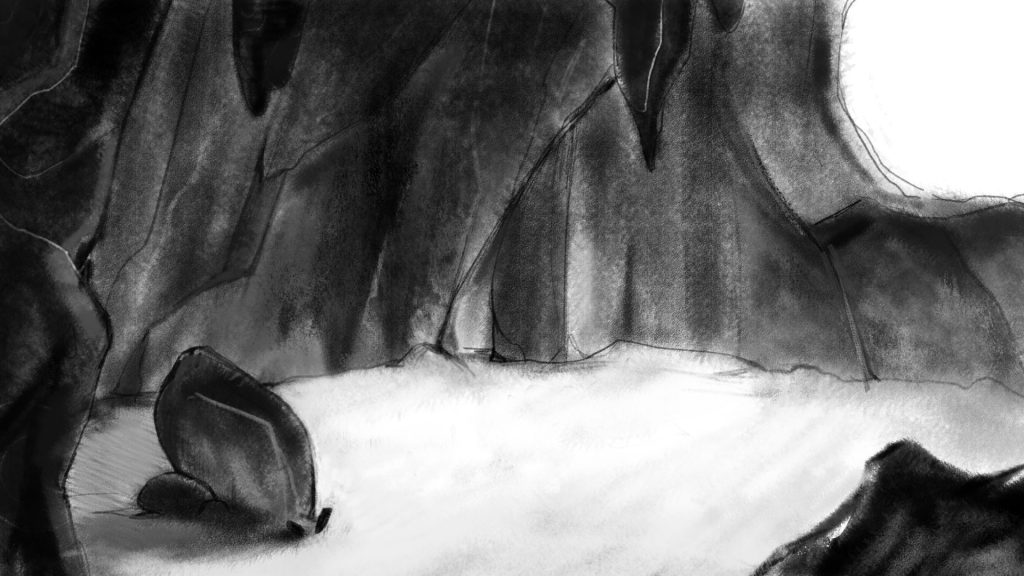
    During the development stage, I began producing concept art and background designs and shared them with my teammate (Picture 4. & Picture 5.). I adjusted the designs based on the feedback I received to ensure that the background design  fit the expectations of my teammate’s  project.
    The first challenge I met was how much visual information should be included in the background design. In the early design, I feel that the background looked quite simple and boring. I just described the mountain’s shape. (Picture 4. & Picture 5.) So, in my opinion, I hoped that the background could show more narrative information. Meanwhile, in the layout lesson, I learned that the background is like a stage, which can provide  information to the audience.
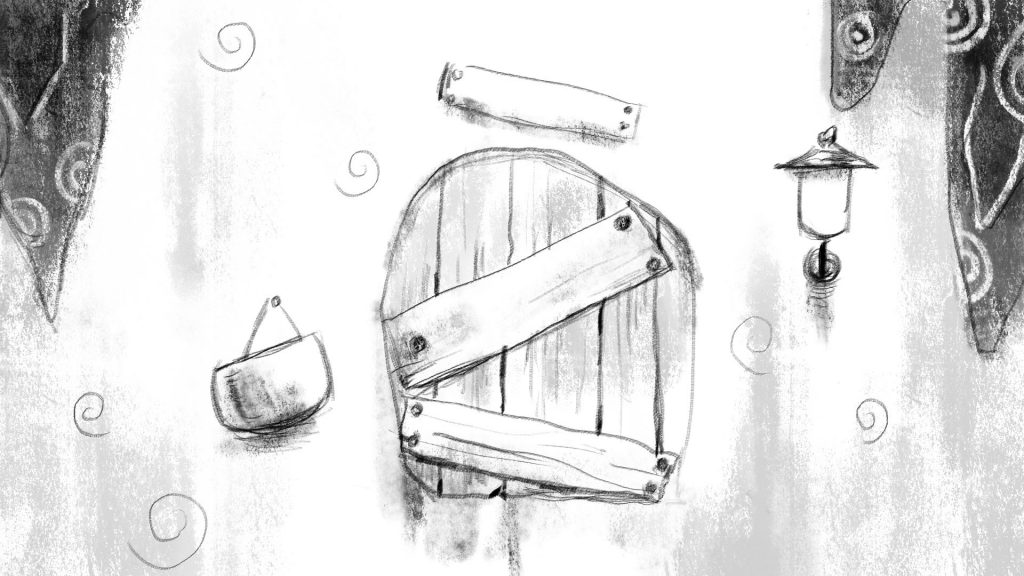
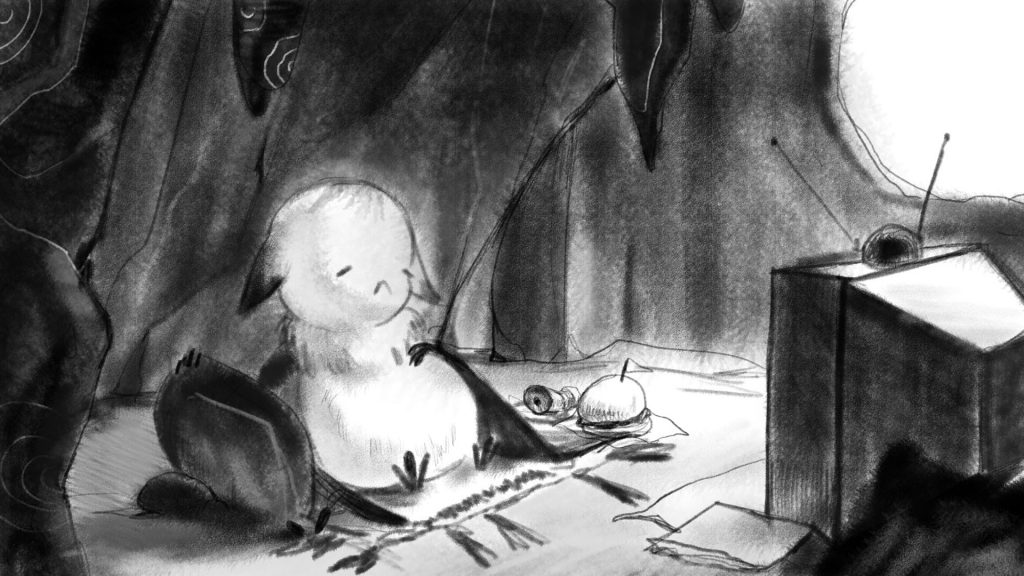
    Therefore, during the development, I added items and patterns related to the narrative,and I hope to make the background more interesting and enrich the engaging visual experience (Picture 7.).
    However, my teammate just simplified these details because she hoped the audience could focus on the character. This discussion helped me reflect on how to balance the relationship between environmental storytelling and character focus, especially within a black-and-white visual style.
    Reflection and Learning

    Another challenge during the project was that we didn’t have a lot of information about the character design and background design. So sometimes the background design did not fully match my teammates’ expectations, which means some designs had to be adjusted.
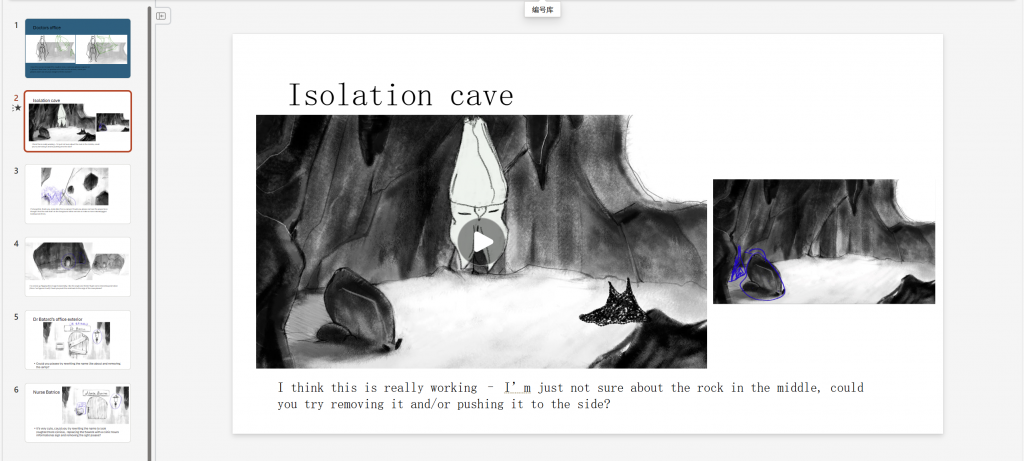
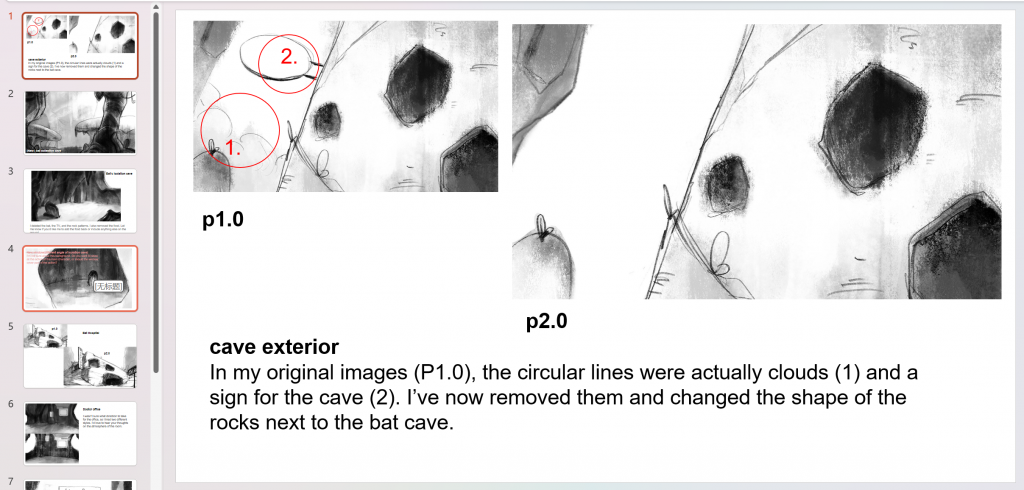
    Picture 9. feedback from My teammate
    Picture 10. My notes and questions

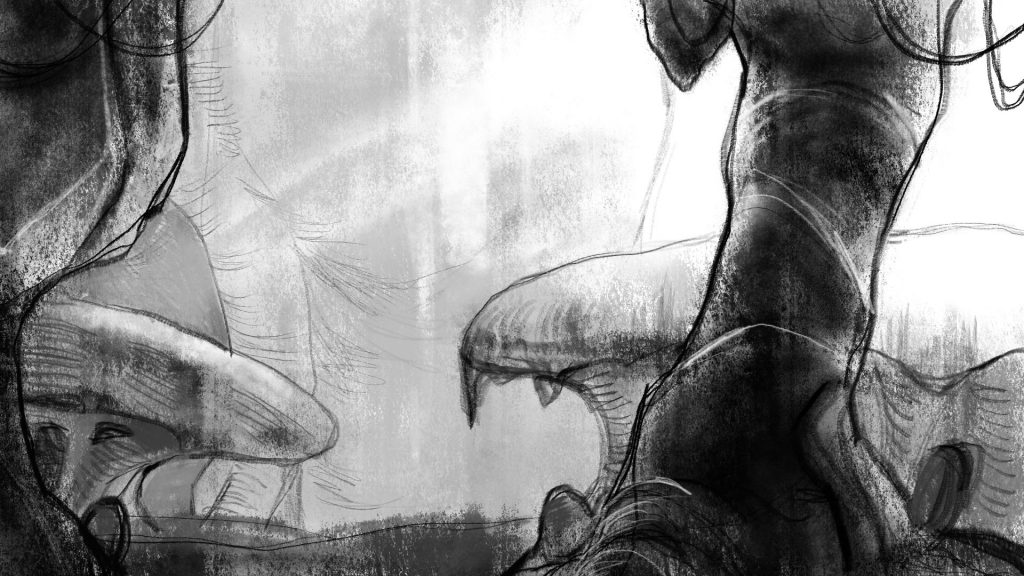
    During the process, I started to realize that there are a few descriptions about the emotion of the background. For example, the bat collective cave should have a warm and comfortable atmosphere. (Picture 11.) Also learned from the storytelling workshop. Based on the characters’ personalities, I can develop the background design or the story, so looking back, I realized that I did not confirm the characters’ personalities first, which influenced my background design process.
    Overall, this collaboration was interesting and challenging for me, especially as an exploration of a new visual style. I have some experience with collaborative animation. I noticed that there are still some connection problems between the character design and the background design.

    However, I think this is a really valuable experience for me. In future collaborations, if I work as a director, I can pay more attention to balancing the relationship between character design and background design. If I work as a background designer or character designer, I will have a better understanding on how to communicate with the other parts. This will help ensure that visual elements support each other and that the storytelling develops smoothly.
  • Practice based research

    1.Understanding Overlapping and Follow-Through

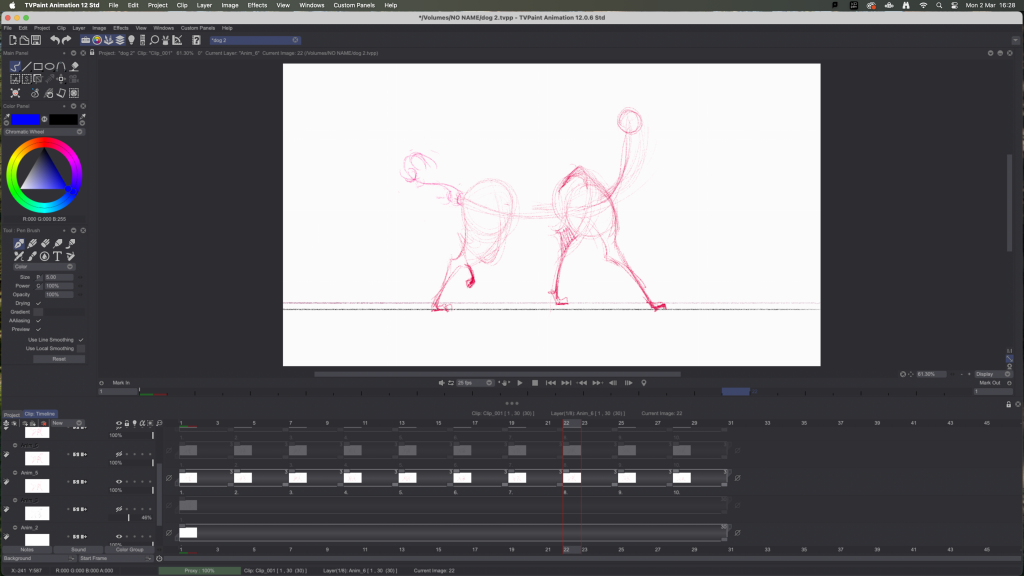
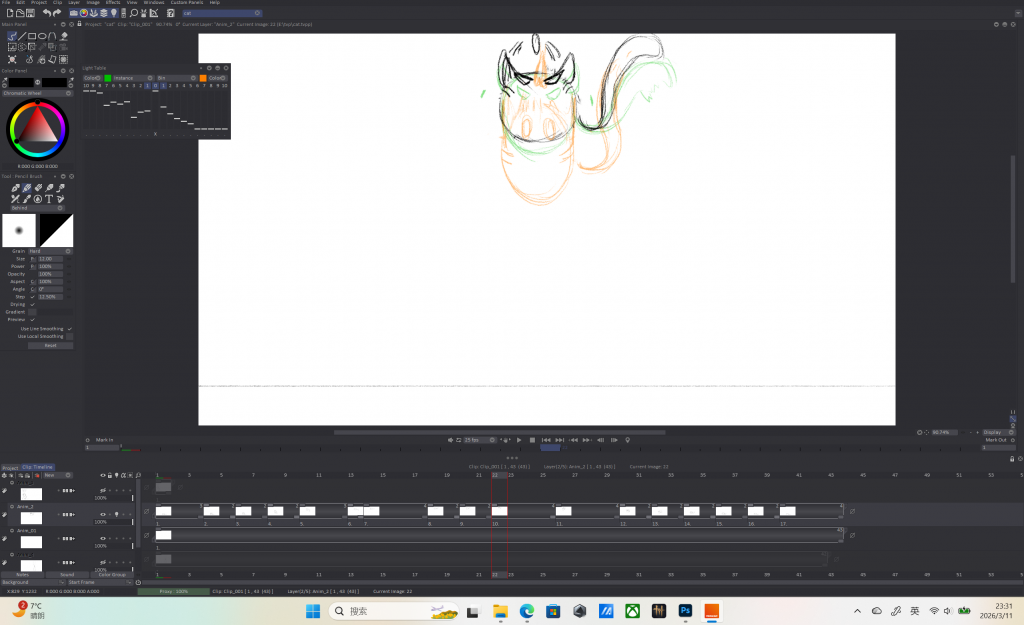
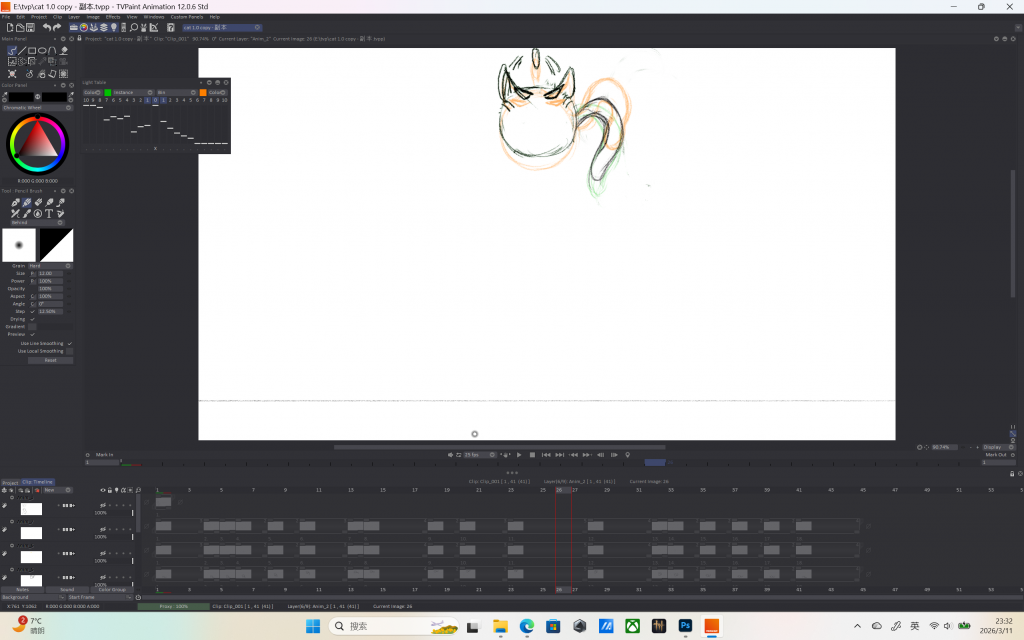
    When I first started practicing animation, I found it difficult to distinguish between overlapping action and follow-through. During the Bouncing Character practice, the cat and its tail initially moved at the same time, completely ignoring the natural delay that should occur in secondary parts of the body.(Picture 1.) After receiving several rounds of feedback and finishing other exercises, I gradually developed a better understanding of overlapping and follow-through. When I reviewed my earlier bouncing character animation, I realized that the tail should move slightly after the main body. I adjusted the timing. This was a very helpful learning point for me.

    Picture1. Inital practice
    Picture 2. After Changing

    2.The Use of Shape Change

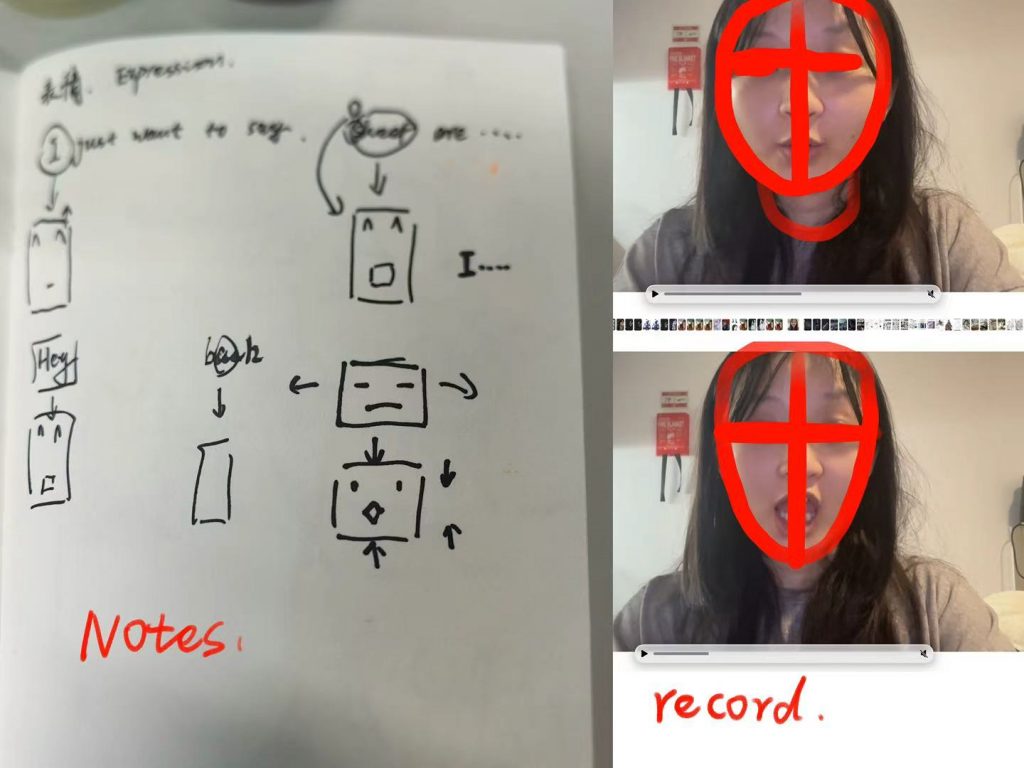
    After completing the Bouncing Character exercise, I realized that the character’s shape changes as it moves over time. In addition, anticipation may also lead to shape changes. During lip sync practice, I focused more on how anticipation and movement influence a character’s shape. For example, when a sheep performs a forward action, its body may compress before moving. (Picture 3.)I also recorded my own speech video as a reference to study how the mouth and face change during dialogue.(Picture 4.)

    Picture 4.

    3. Body Shape and Character Personality

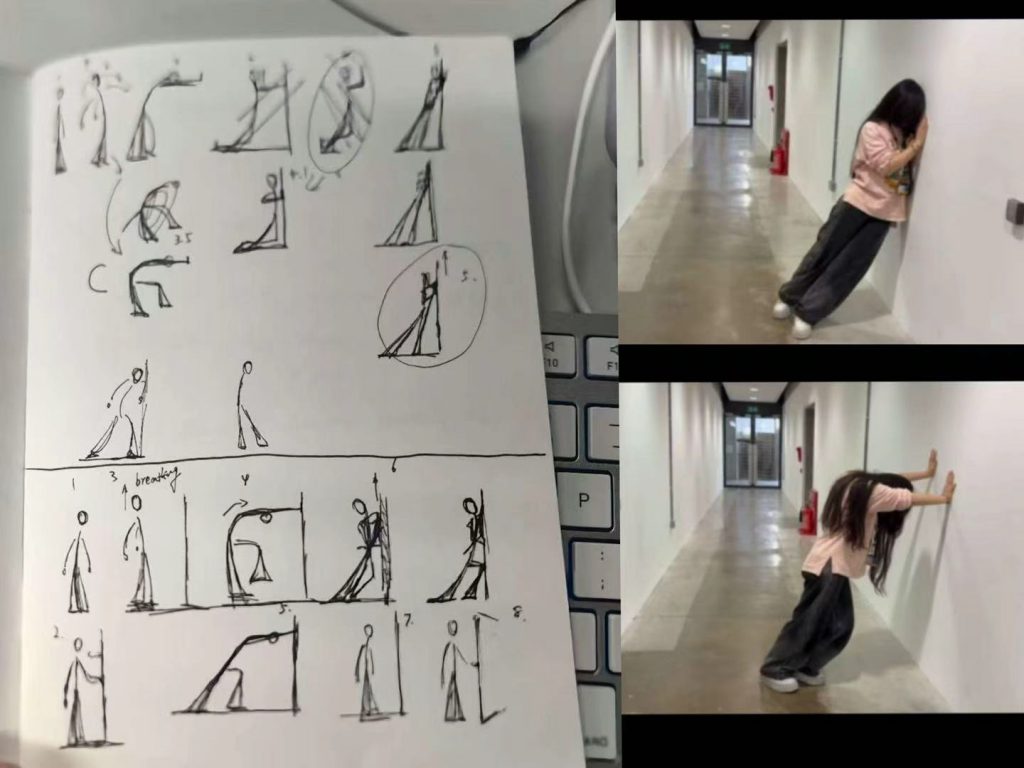
    In the early push and pull animation exercise, I mainly simplified the character’s body shapes by observing and recording my own acting reference. During this practice, I focused mainly on drawing the body with simple shapes or lines,such as using the letter C to describe the body shape. (Picture 5.)

    Picture 5. Draft and recording

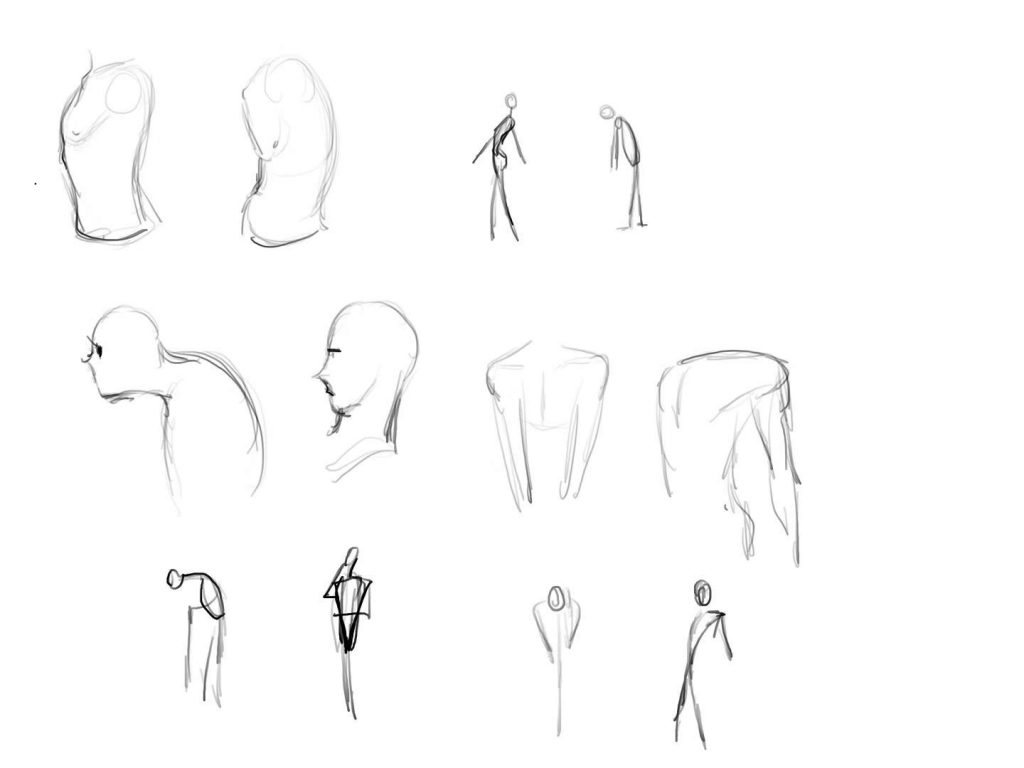
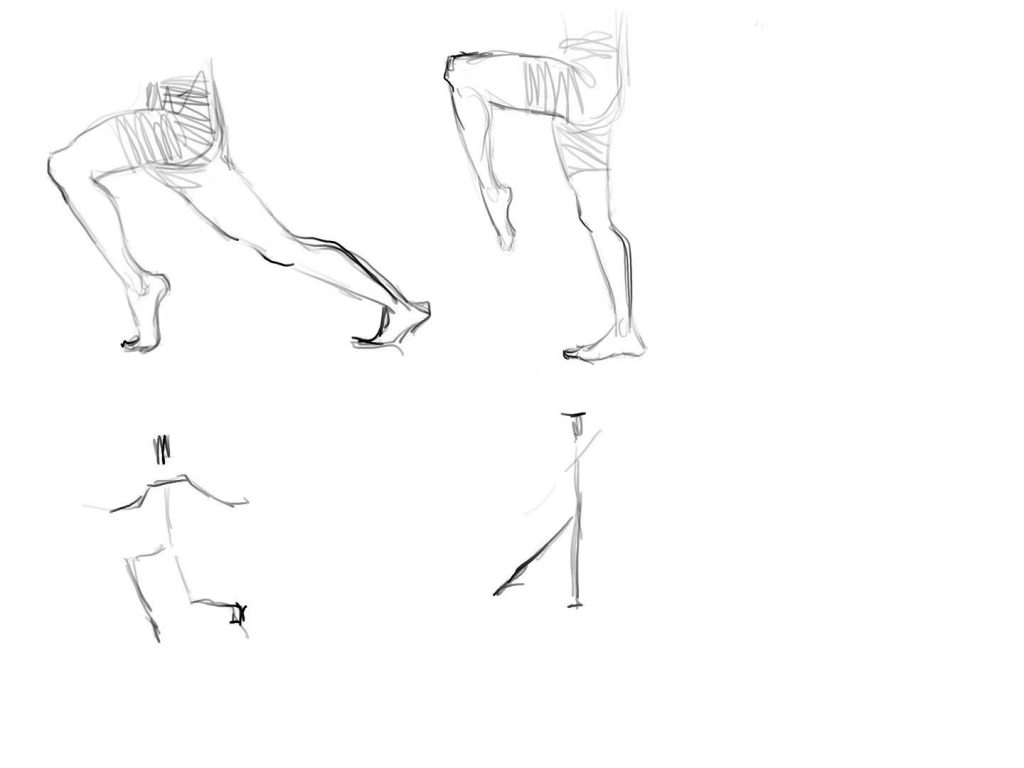
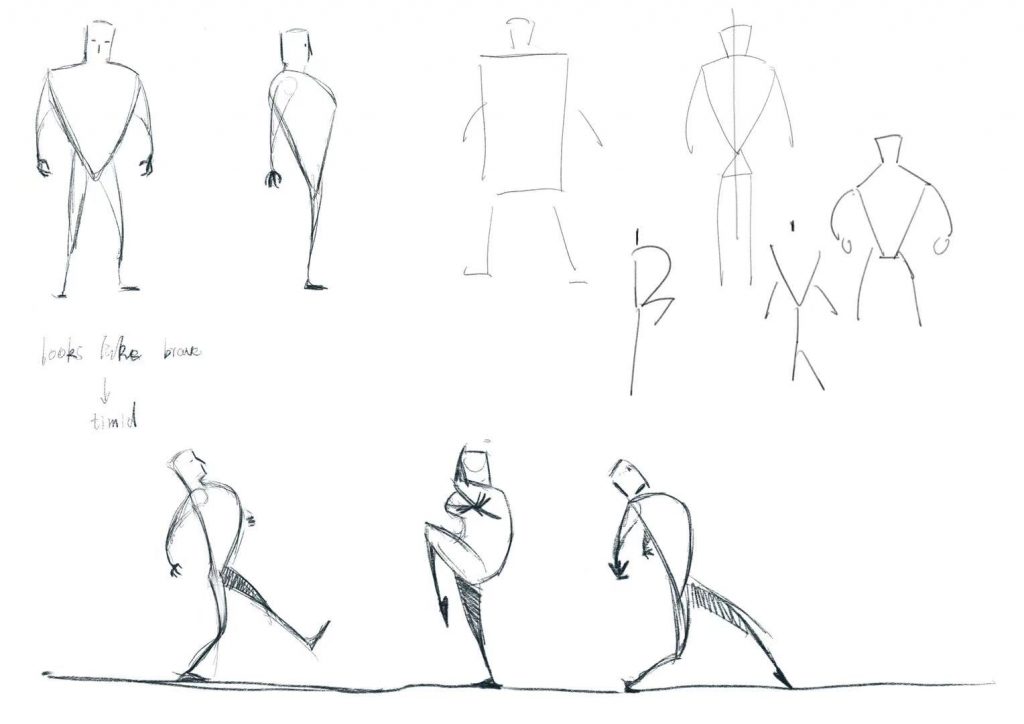
    However, through the Acting for Animation course, I realized that body shapes can show a character’s personality and emotional state. For example, chest forward means  confidence or energy, while chest backwards means timid or tired.(picture 6.) In Picture 7. Leg movement can also express the character’s personality. For example, the pose on the left presents a sneaky character.

    Picture 6. Notes from Action lesson
    Picture 7. Notes from Action Lesson

    This understanding influenced my approach in the Mood Change Walk exercise. I wanted to create a strong first impression of the character, who is brave and confident. But his real personality is timid, and he is scared of the dog. Therefore,  I exaggerated the forward position of the chest and used triangular shapes to make the character appear strong. I also kept the legs straight to reinforce the feeling of confidence.  When the character’s mood changes, I change leg movement and let this character  use tiptoe to walk to show his real personality. (Picture 8.). But during this practice, my main problem was that  I couldn’t control the size of  the character as it moved. So when I drew the character’s  movement, I needed to pay more attention to its size.

    Picture 8. Draft of Mood Change Walk exercise

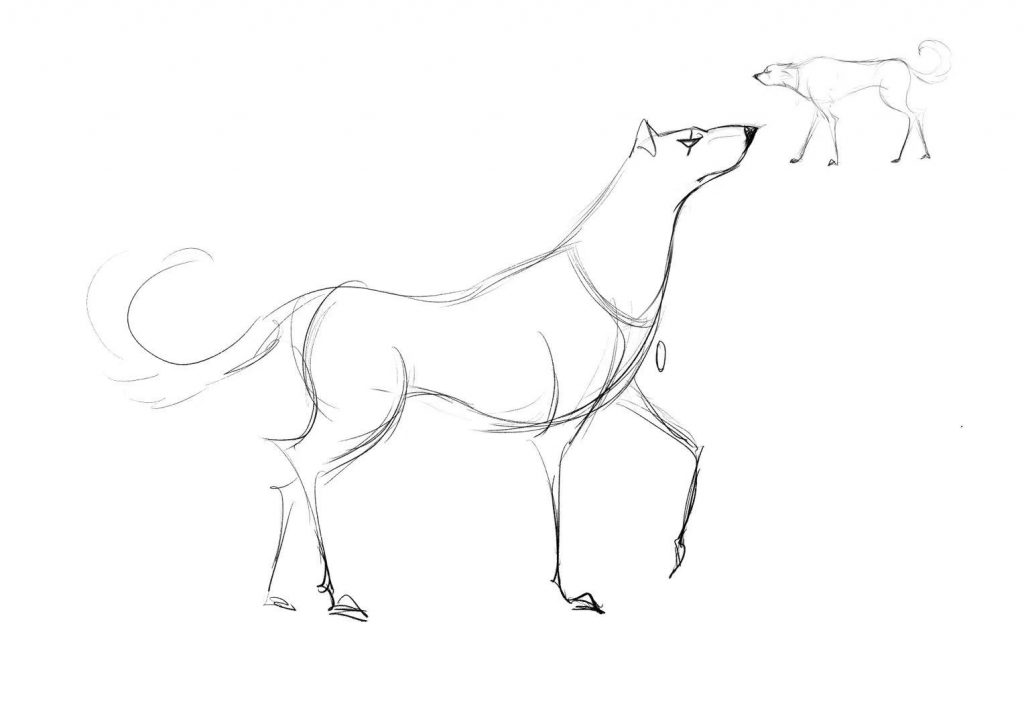
    During the Quadruped Walk exercise, I applied a similar way  when designing a bad dog. By lifting the head and expanding the chest, the character appears confident and aggressive. (Picture 9. )

    Picture 9. Draft of Quadruped Walk exercise

    4. Developing 3D Thinking in 2D Animation

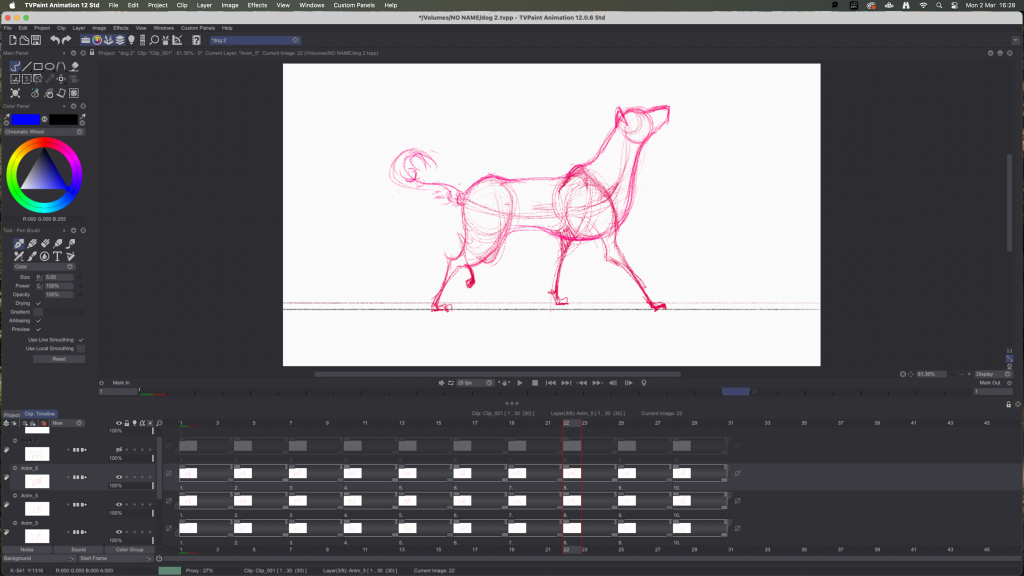
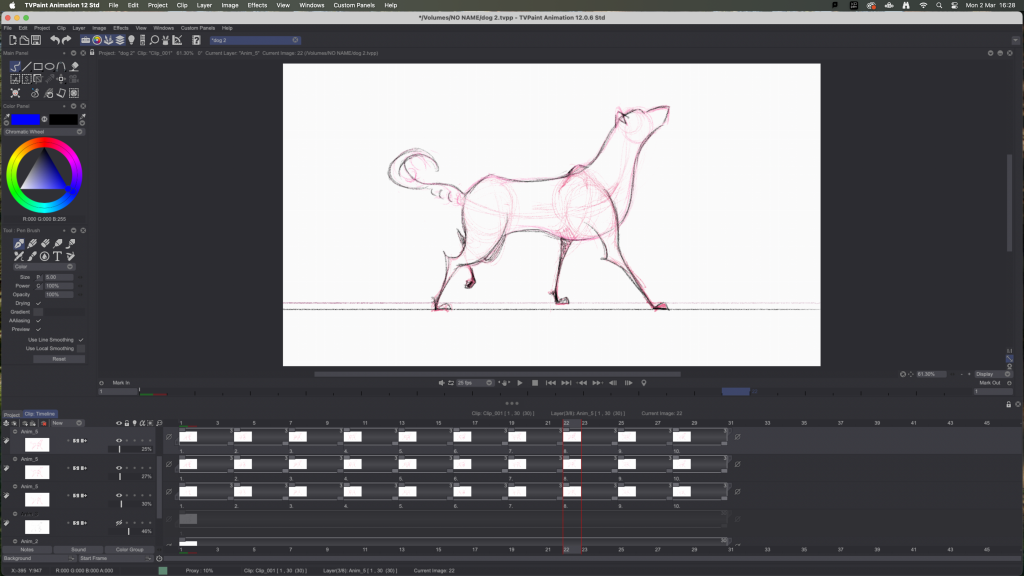
    In addition, I also realized that  my characters often appeared too flat in my earlier animation exercises. Especially  when I saw the reference of the dog walking, I found  that the dog’s body swings from side to side.(Picture 10. )

    Picture 10. Reference

    I didn’t have any idea about that. So drawing volume is a challenge for me. During this process, I recalled drawing methods I learned in foundational sketching classes. For example, the dog’s chest and pelvis can be described using the cylinder. (Picture 11.)

    Picture 11. Thinking about bones

    Therefore, in the draft stage, I began to imagine different parts of the body as cylinders. This approach helped me better understand volume. It is also easier for me to think about the movement of the body in 3D space.

    Picture 12. Process
    Picture 13. Process

    Overall, Unit 1 helped me identify weaknesses in my animation practice, particularly regarding timing, shape changes, and 3D thinking. It also encouraged me to combine drawing knowledge with acting theory to improve the performance of my character. I began to understand how to use the different skills to help my characters communicate  more effectively with the audience.

  • Animation Principle Analysis

    Video:https://youtu.be/8cC16UMMlfs?si=wYiKmjhhxBgXHFHN

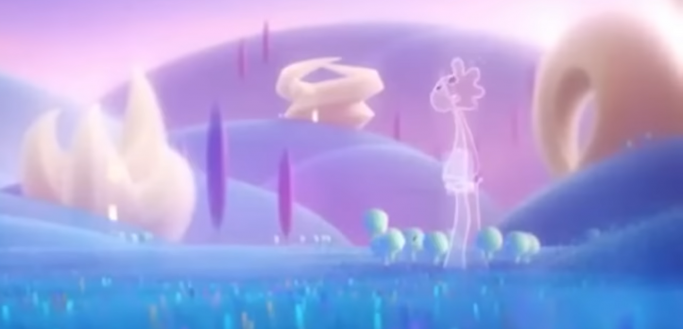
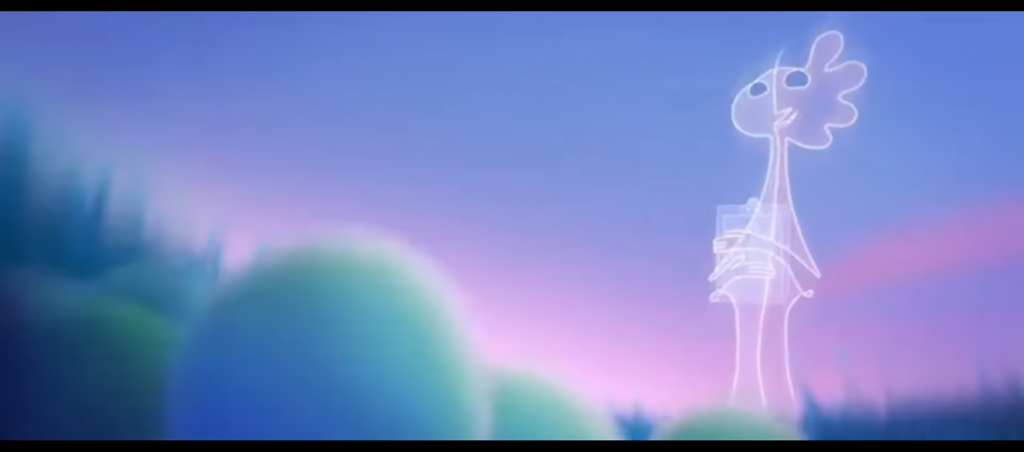
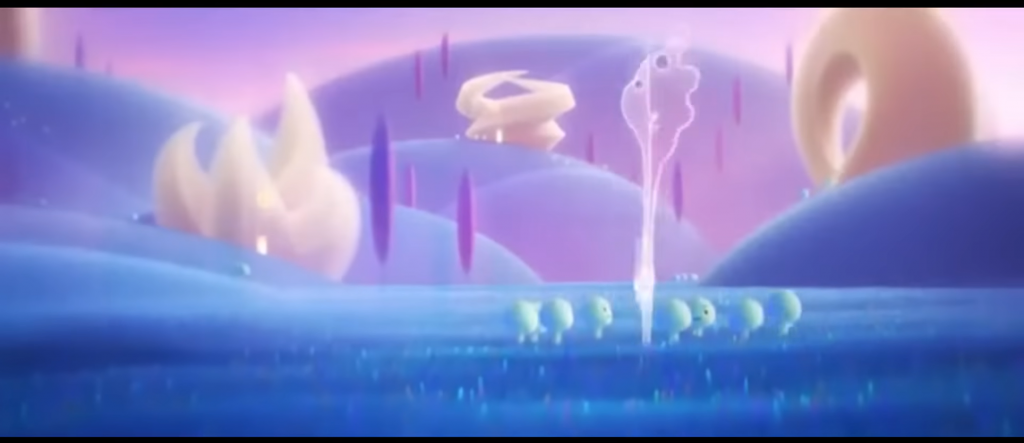
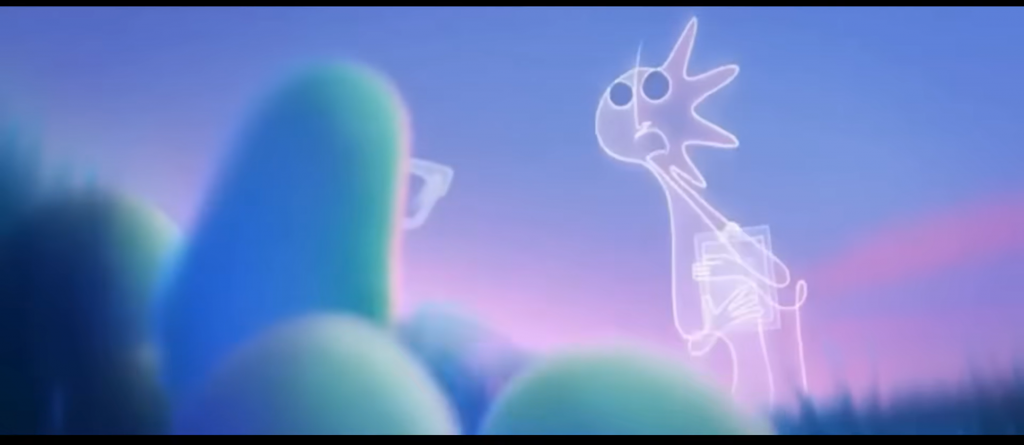
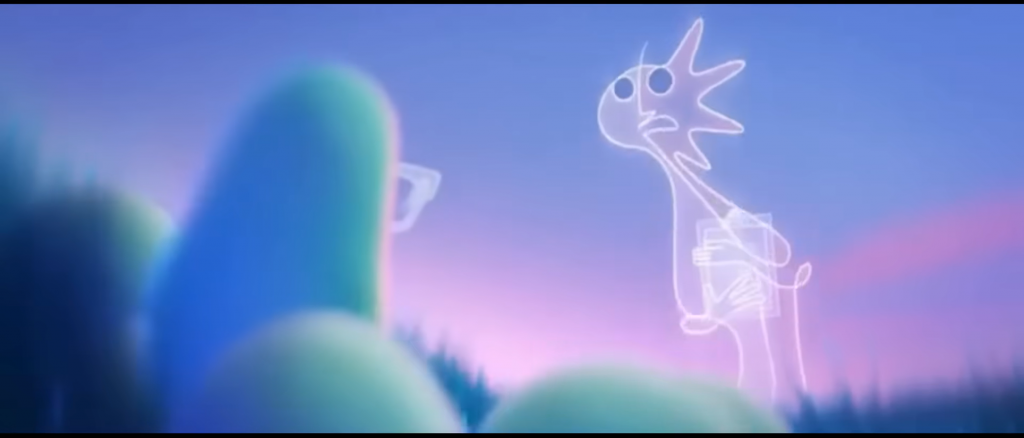
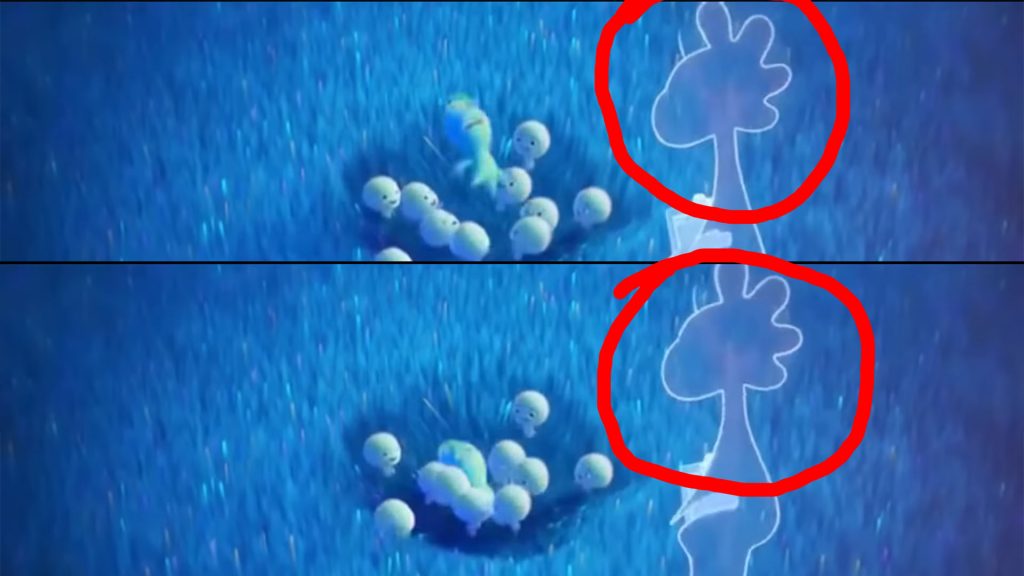
    Staging: In this clip, this is the first time Joe meets Jerry. The staging clearly shows Jerry’s status within the Great Before. Jerry is taller and larger than the surrounding souls (picture 1.), which immediately draws the audience’s attention and suggests that this character holds a higher status than others. The audience may also be reminded of interaction between elders and children, such as a parent and child or teacher and students. In Picture 2, low-angle shot reinforce the audience’s impression of Jerry’s status, although her tone is gentle and friendly.

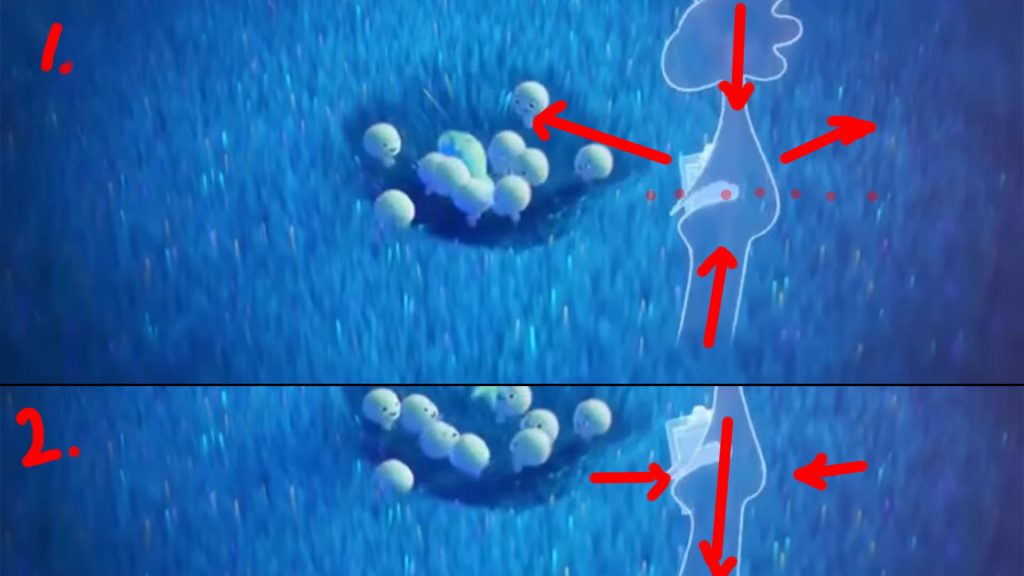
    Squash and Stretch: Jerry’s abstract 2D design allows for flexible shape transformation. In picture 3, there is a noticeable stretch when Jerry changes her shape to move underground and shift her position, resembling water flowing into the soil.  When she returns to the surface, her body slightly rebounds.This helps the audience understand that Jerry is a fluid and flexible creature.

    Picture 3.

    Secondary Action:when Jerry says ‘ Hey ,’ the main action is her facial expression, while the secondary action is the hair transforming from a rounded to a sharper form, conveying mild anger or a warning. In addition, when she apologizes to Joe, she stoops down slightly and shrugs. These gestures represent Jerry as a kind and friendly creature. 

    Picture 4
    Picture 5.

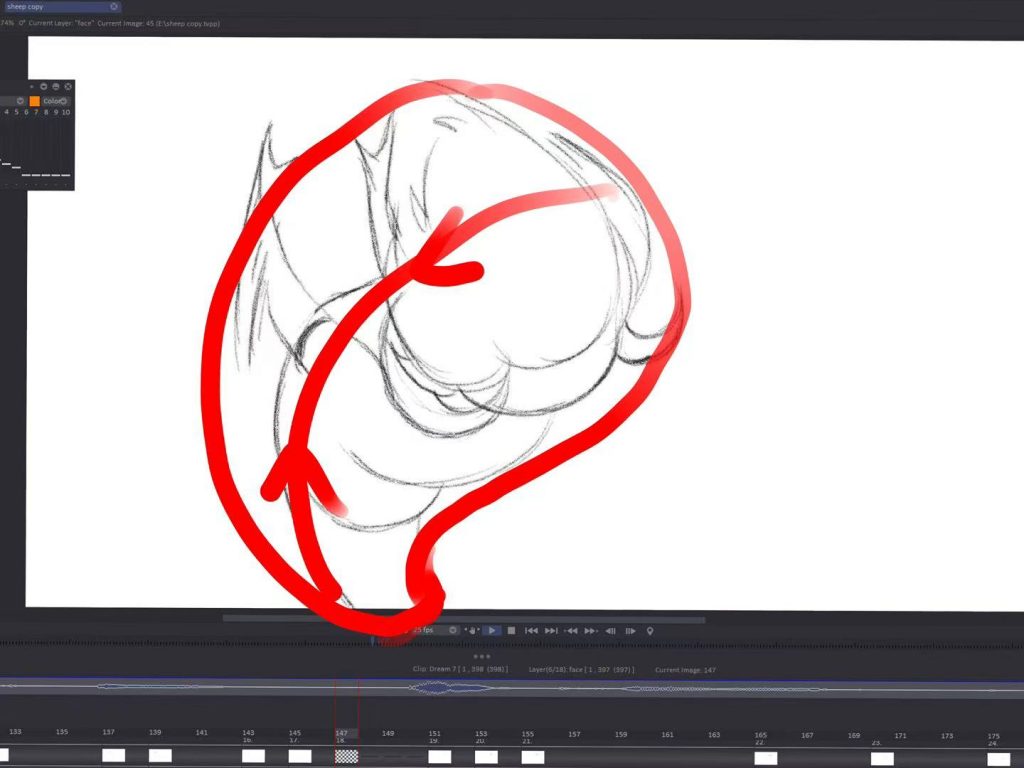
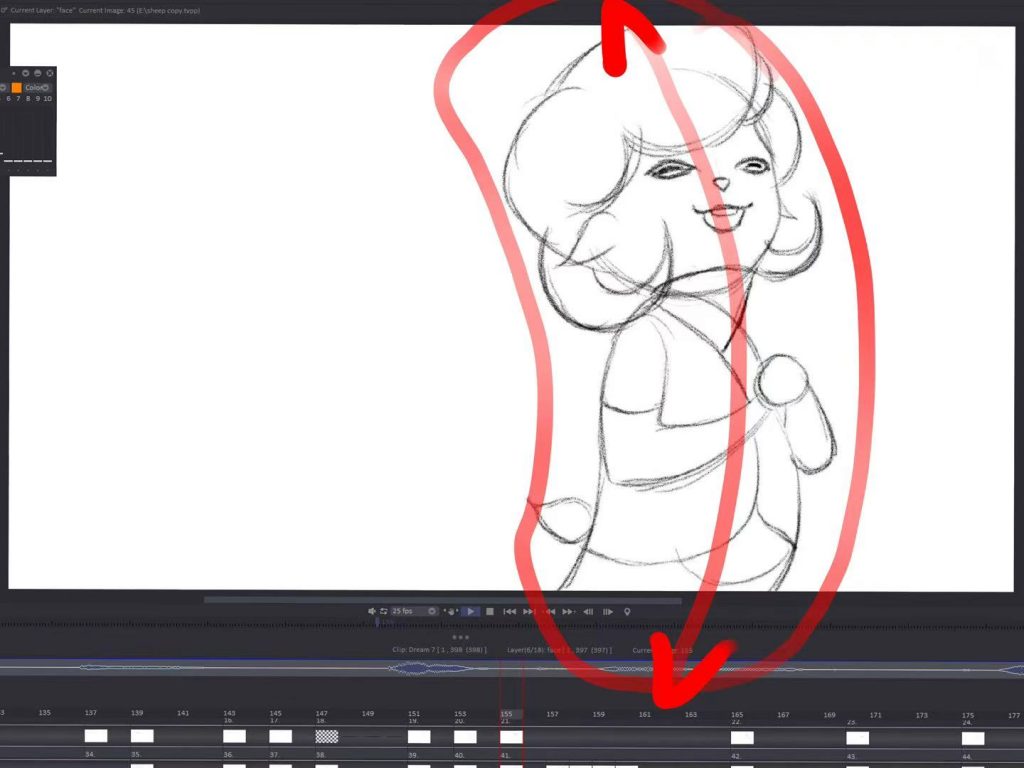
    Follow Through and Overlapping Action:In Jerry’s case, we can see that her  hair follows the motion of her body, and different parts of her body move at slightly different times.

    Picture 6.

    But the follow through and overlapping action are not perfect enough. However, in abstract character design, the head and neck often move together with the chest, rather than independently (Picture ). In Picture , when Jerry returns to the ground, the follow through and overlapping can be observed in her body movement. However, there weren’t obvious shape changes in her head and neck. In the previous shots, Jerry is a highly fluid and flexible creature. Therefore, in this shot her movement appears slightly more stiff, which may reduce the audience’s perception of her fluidity.  


    Picture 7.