1.Understanding Overlapping and Follow-Through
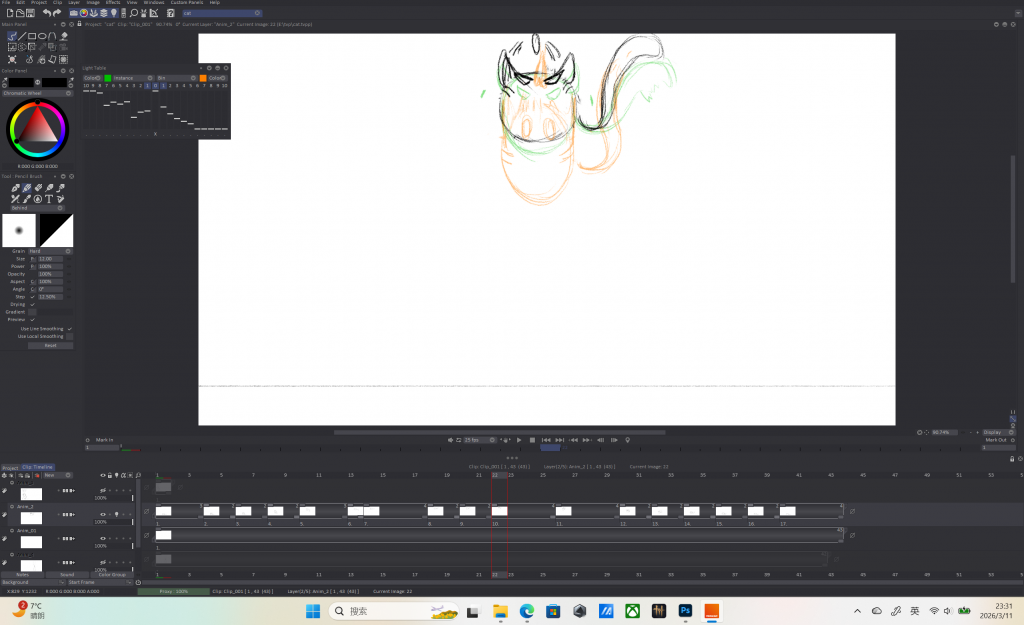
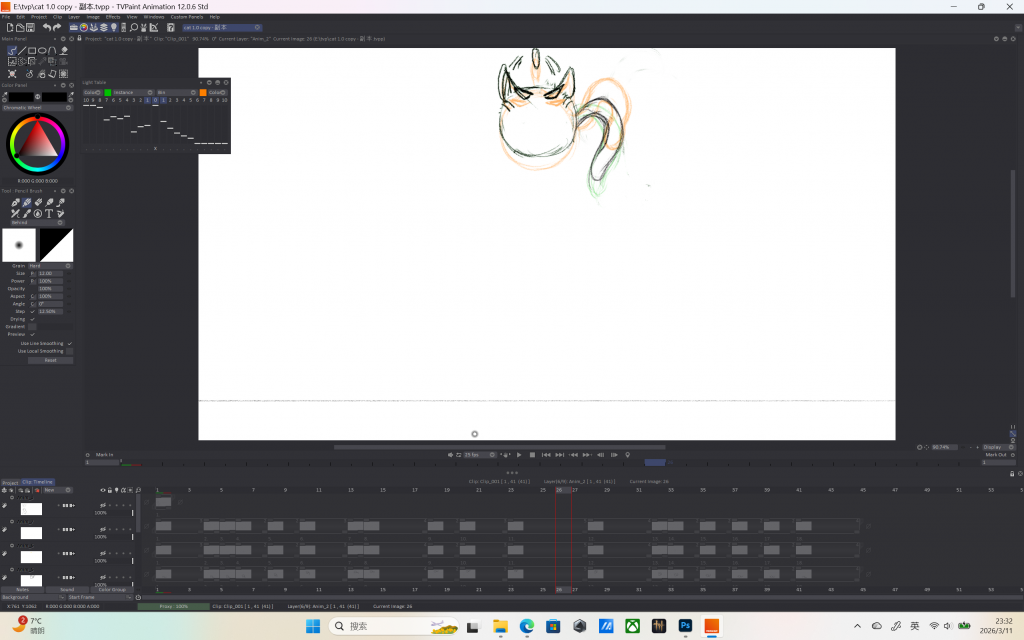
When I first started practicing animation, I found it difficult to distinguish between overlapping action and follow-through. During the Bouncing Character practice, the cat and its tail initially moved at the same time, completely ignoring the natural delay that should occur in secondary parts of the body.(Picture 1.) After receiving several rounds of feedback and finishing other exercises, I gradually developed a better understanding of overlapping and follow-through. When I reviewed my earlier bouncing character animation, I realized that the tail should move slightly after the main body. I adjusted the timing. This was a very helpful learning point for me.
2.The Use of Shape Change
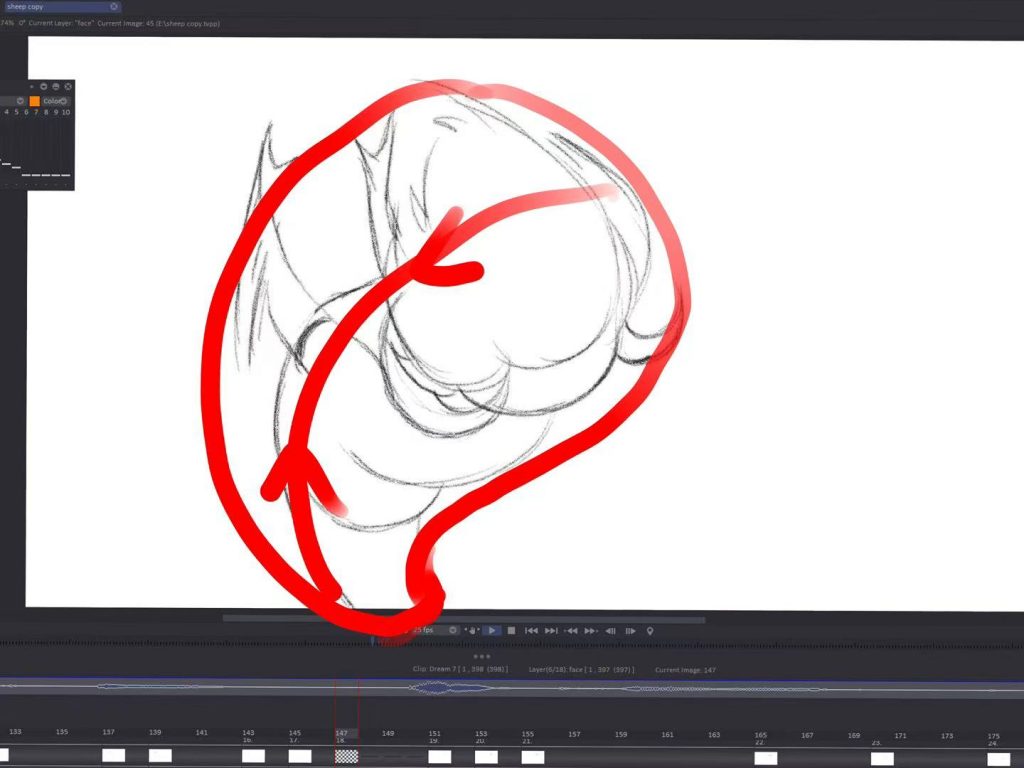
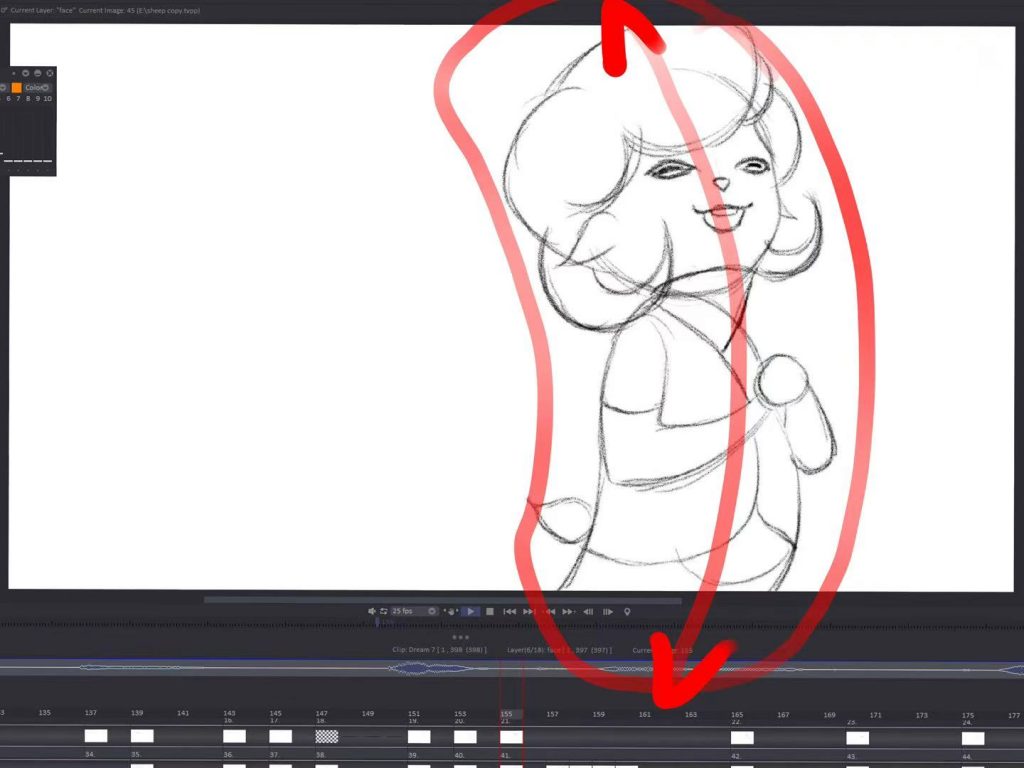
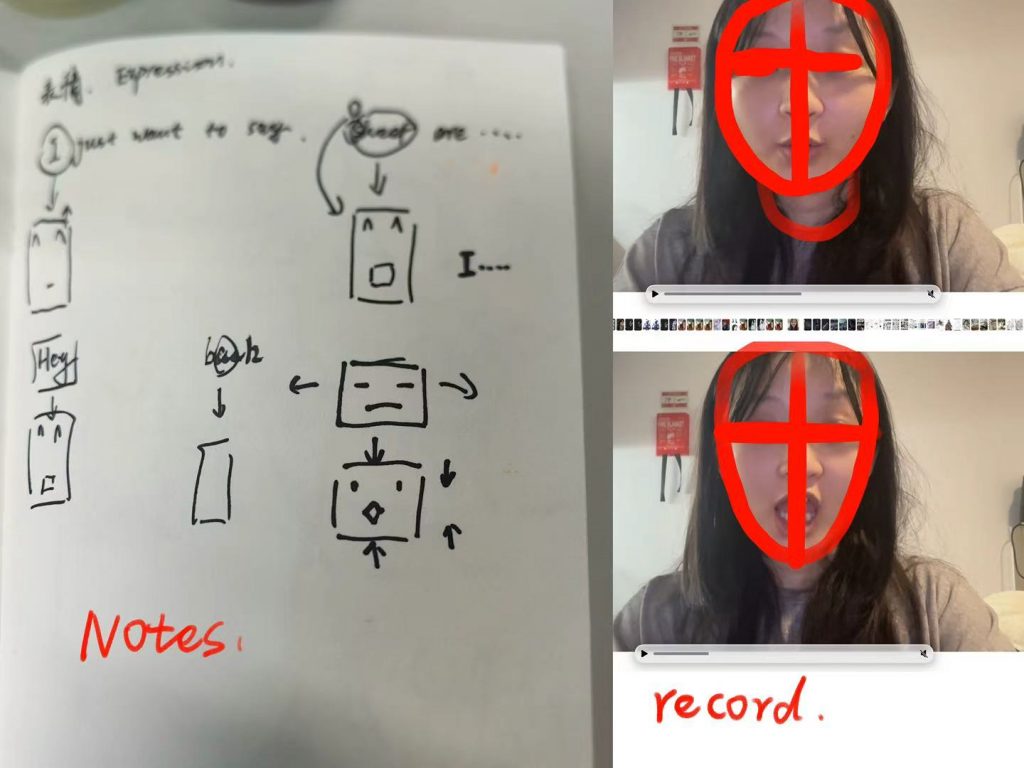
After completing the Bouncing Character exercise, I realized that the character’s shape changes as it moves over time. In addition, anticipation may also lead to shape changes. During lip sync practice, I focused more on how anticipation and movement influence a character’s shape. For example, when a sheep performs a forward action, its body may compress before moving. (Picture 3.)I also recorded my own speech video as a reference to study how the mouth and face change during dialogue.(Picture 4.)
3. Body Shape and Character Personality
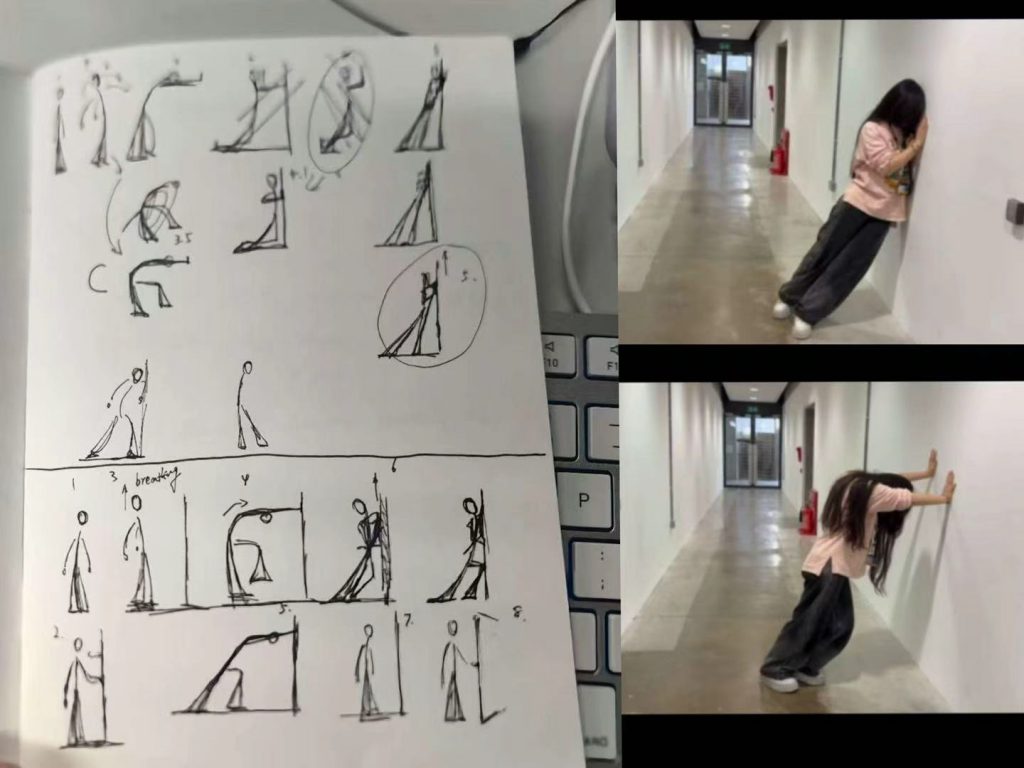
In the early push and pull animation exercise, I mainly simplified the character’s body shapes by observing and recording my own acting reference. During this practice, I focused mainly on drawing the body with simple shapes or lines,such as using the letter C to describe the body shape. (Picture 5.)
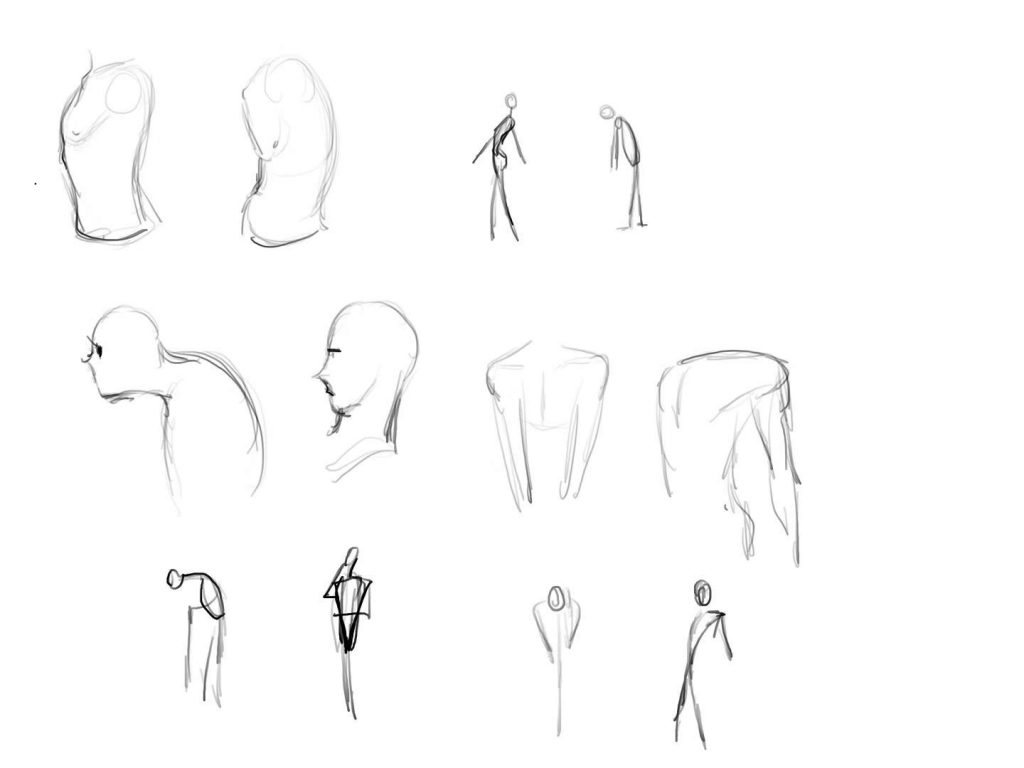
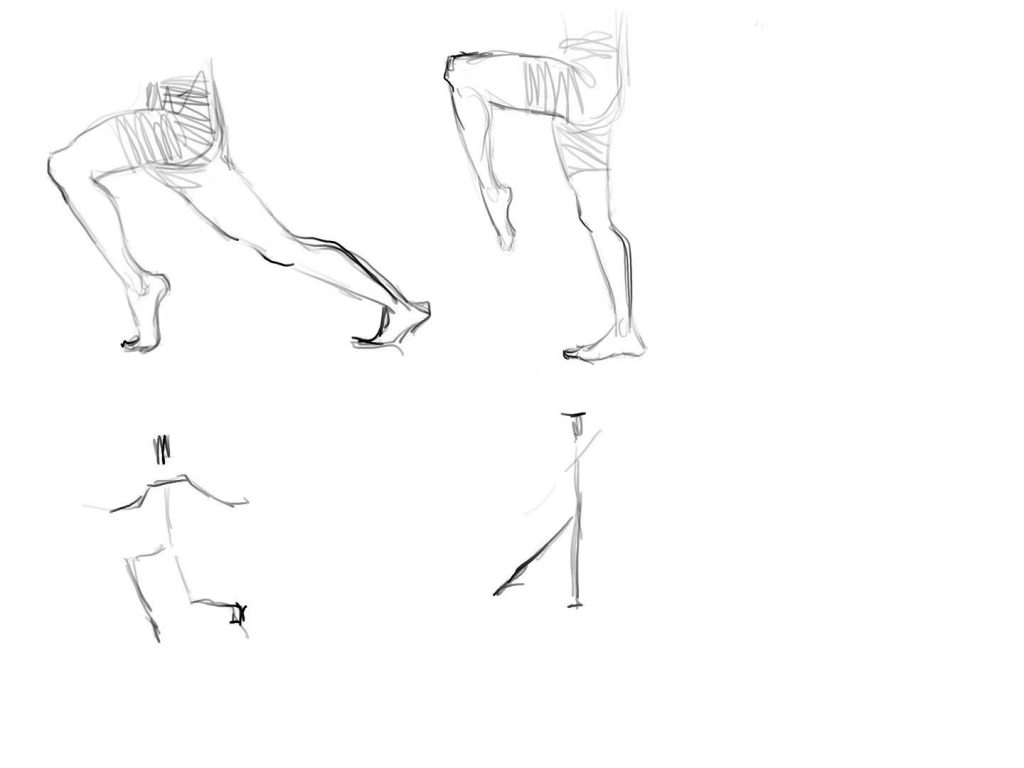
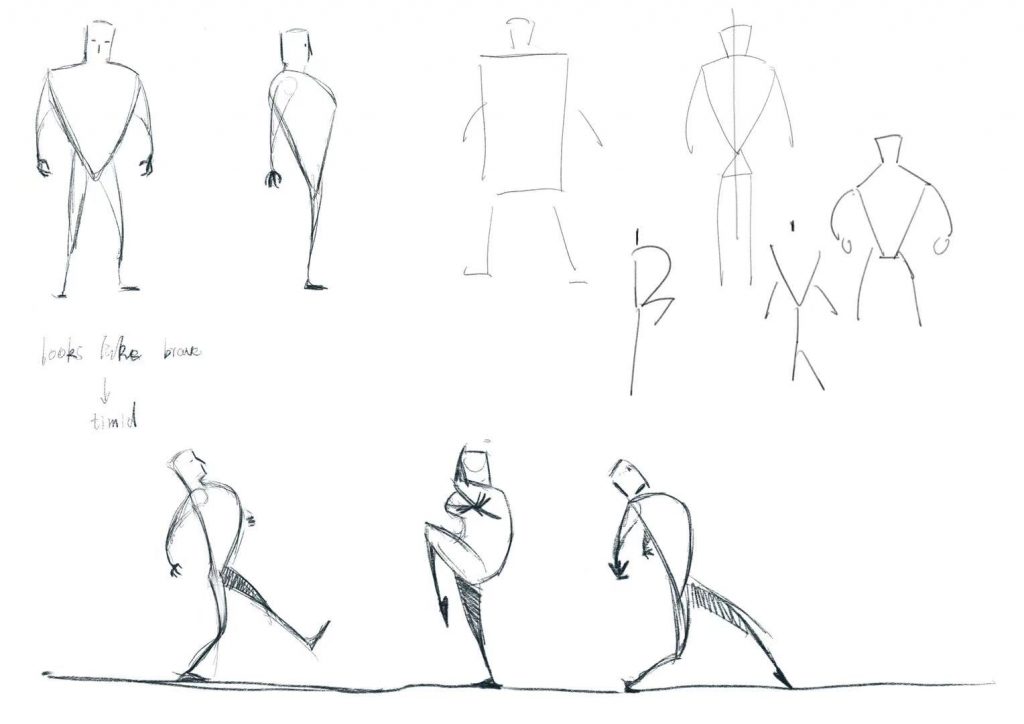
However, through the Acting for Animation course, I realized that body shapes can show a character’s personality and emotional state. For example, chest forward means confidence or energy, while chest backwards means timid or tired.(picture 6.) In Picture 7. Leg movement can also express the character’s personality. For example, the pose on the left presents a sneaky character.
This understanding influenced my approach in the Mood Change Walk exercise. I wanted to create a strong first impression of the character, who is brave and confident. But his real personality is timid, and he is scared of the dog. Therefore, I exaggerated the forward position of the chest and used triangular shapes to make the character appear strong. I also kept the legs straight to reinforce the feeling of confidence. When the character’s mood changes, I change leg movement and let this character use tiptoe to walk to show his real personality. (Picture 8.). But during this practice, my main problem was that I couldn’t control the size of the character as it moved. So when I drew the character’s movement, I needed to pay more attention to its size.
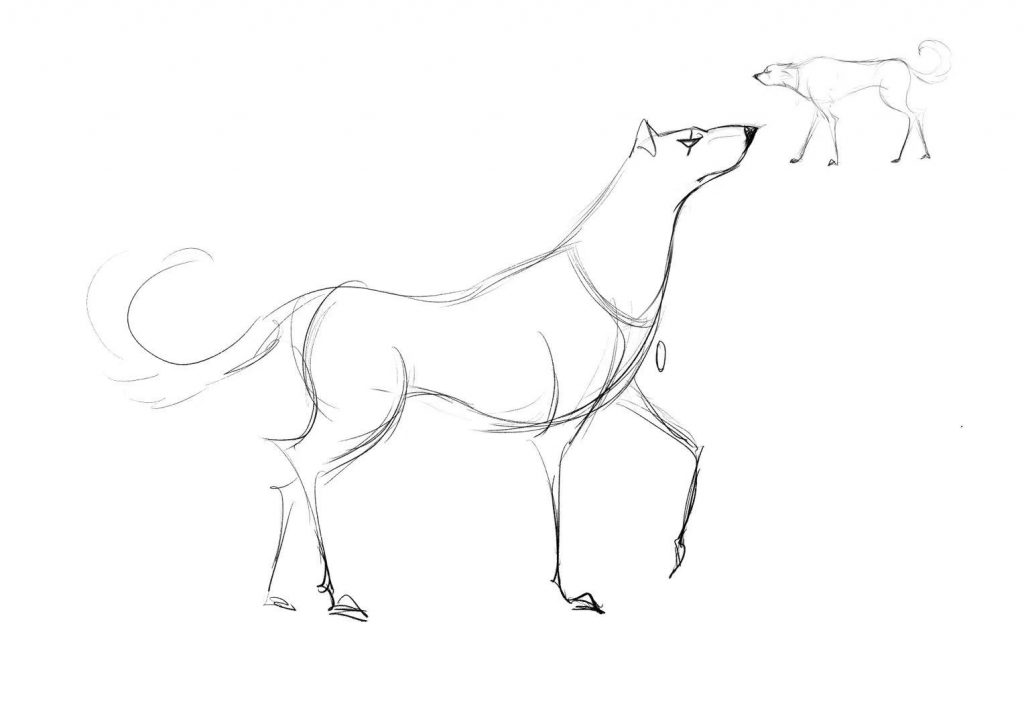
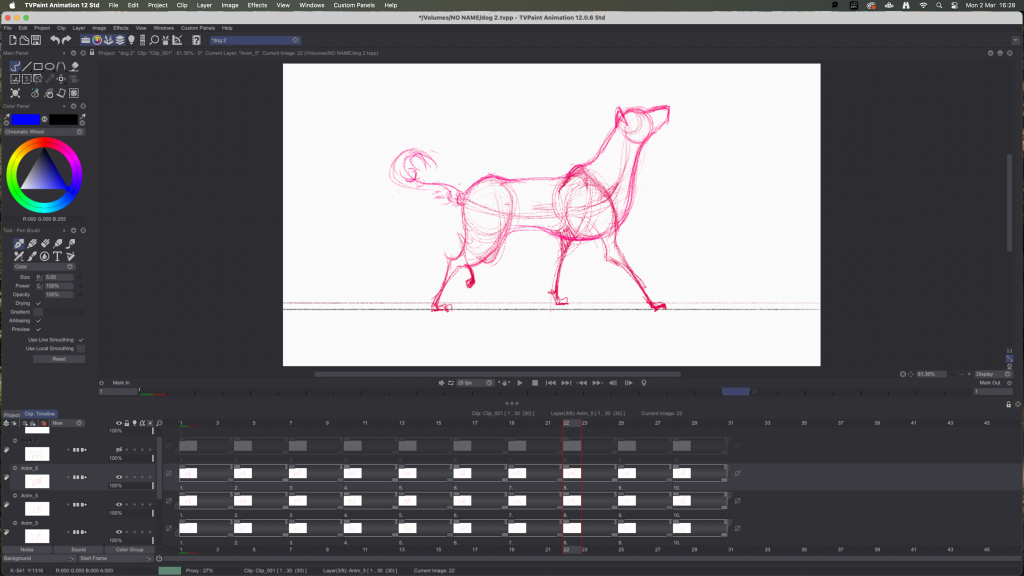
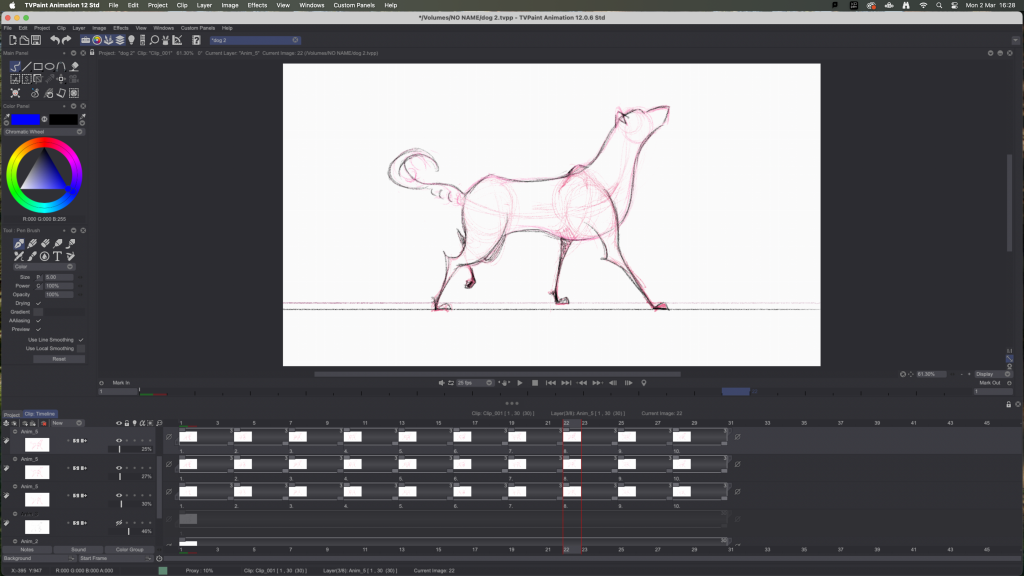
During the Quadruped Walk exercise, I applied a similar way when designing a bad dog. By lifting the head and expanding the chest, the character appears confident and aggressive. (Picture 9. )
4. Developing 3D Thinking in 2D Animation
In addition, I also realized that my characters often appeared too flat in my earlier animation exercises. Especially when I saw the reference of the dog walking, I found that the dog’s body swings from side to side.(Picture 10. )
I didn’t have any idea about that. So drawing volume is a challenge for me. During this process, I recalled drawing methods I learned in foundational sketching classes. For example, the dog’s chest and pelvis can be described using the cylinder. (Picture 11.)
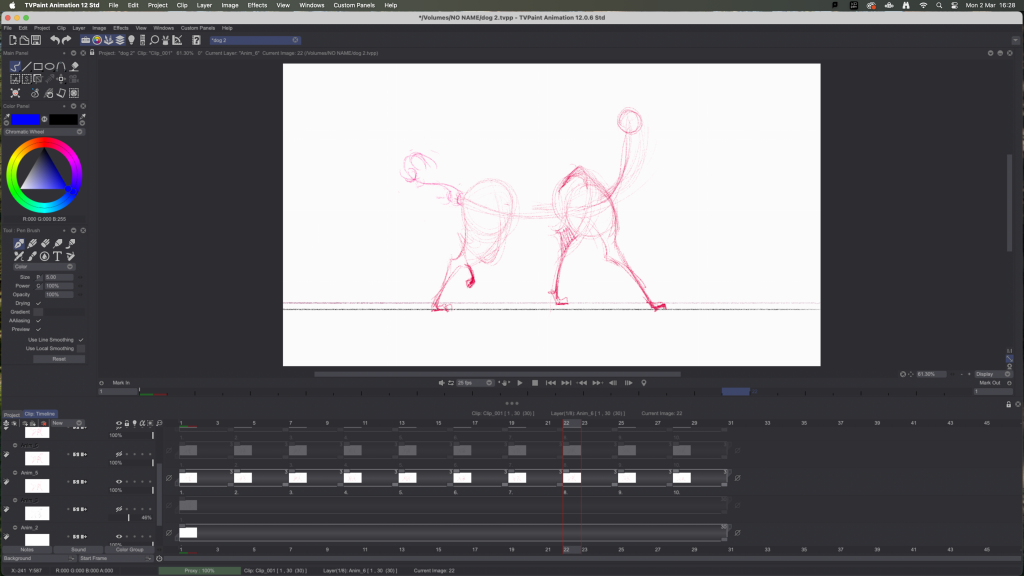
Therefore, in the draft stage, I began to imagine different parts of the body as cylinders. This approach helped me better understand volume. It is also easier for me to think about the movement of the body in 3D space.
Overall, Unit 1 helped me identify weaknesses in my animation practice, particularly regarding timing, shape changes, and 3D thinking. It also encouraged me to combine drawing knowledge with acting theory to improve the performance of my character. I began to understand how to use the different skills to help my characters communicate more effectively with the audience.
Leave a Reply